







What's Happening?
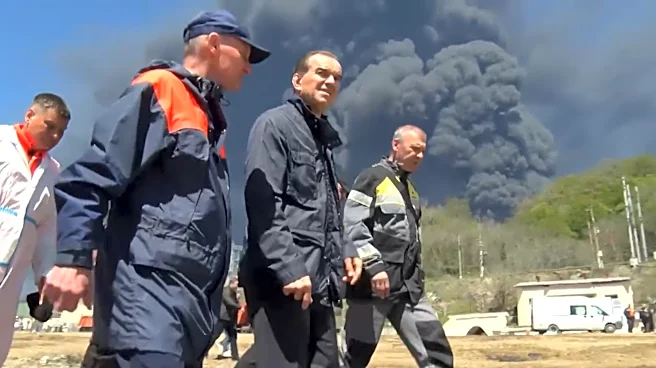
Ukraine has denied Russian claims that a Ukrainian drone struck the Zaporizhzhia nuclear plant, while confirming new strikes on Russian energy facilities. Ukrainian drones reportedly targeted the Saratov oil refinery, causing a significant fire, and a fuel
depot in Russia's Rostov region. These attacks are part of Ukraine's strategy to disrupt Russia's energy sector, which funds its military operations. Ukrainian President Volodymyr Zelensky highlighted the strategic importance of these long-range strikes. Meanwhile, Russia accused Ukraine of targeting the nuclear plant, a claim Ukraine refutes, emphasizing adherence to international humanitarian law.
Why It's Important?
The ongoing conflict between Ukraine and Russia continues to escalate, with energy infrastructure becoming a focal point. Ukraine's attacks on Russian energy facilities aim to weaken Russia's war capabilities by disrupting its energy supply chain. The denial of the nuclear plant strike underscores the high stakes involved, as any damage to such facilities could have catastrophic consequences. This situation highlights the broader geopolitical tensions and the potential for further escalation, impacting global energy markets and international diplomatic efforts to resolve the conflict.
What's Next?
As the conflict persists, both Ukraine and Russia are likely to continue targeting each other's critical infrastructure. The international community, particularly organizations like the International Atomic Energy Agency, will closely monitor the situation to prevent nuclear incidents. Diplomatic efforts may intensify to de-escalate tensions and address the humanitarian and environmental risks associated with the conflict. The strategic use of drones and other uncrewed systems in warfare is also likely to influence military strategies globally.