
What's Happening?
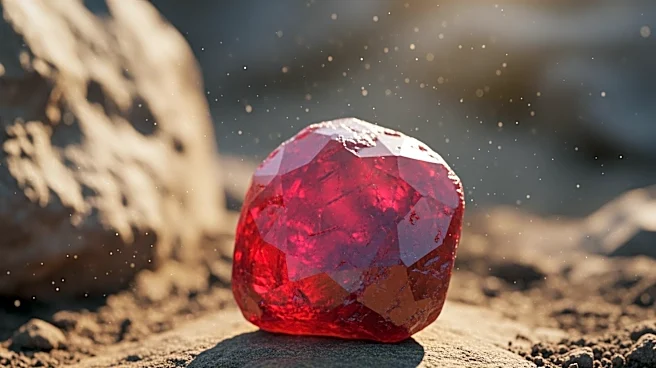
Miners in Myanmar have discovered a rare and massive ruby weighing five pounds and measuring 11,000 carats. This significant find was reported by the country's state media and occurred near the town of
Mogok, a region known for its lucrative gem-mining industry. The ruby was unveiled by President Min Aung Hlaing and is now considered the second-largest ruby ever found in Myanmar. Despite being smaller than the largest ruby discovered in 1996, this new gem is deemed more valuable due to its superior color, quality, and high-grade transparency. Myanmar is a major player in the global gemstone market, producing up to 90% of the world's rubies, primarily from the Mogok region.
Why It's Important?
The discovery of this ruby is significant for Myanmar's economy, which heavily relies on gemstone exports as a major revenue source. However, the gem industry in Myanmar is controversial due to its ties to the military government and the ongoing conflict in the region. Human rights groups have criticized the purchase of Myanmar-sourced gems, as the industry supports military regimes and armed groups seeking autonomy. This discovery highlights the complex interplay between natural resources and political dynamics in Myanmar, affecting both local and international stakeholders in the gemstone market.
What's Next?
The unveiling of the ruby by President Min Aung Hlaing may lead to increased scrutiny from international human rights organizations and potential calls for sanctions or boycotts against Myanmar's gem industry. The ongoing conflict and political instability in the region could also impact the future of gemstone mining and trade. Stakeholders, including jewelers and international buyers, may need to navigate ethical considerations and potential supply chain disruptions as they assess their involvement with Myanmar-sourced gems.
Beyond the Headlines
The discovery of the ruby underscores the ethical dilemmas faced by the global gemstone industry, where the allure of rare and valuable stones is often intertwined with human rights concerns and political conflicts. This situation may prompt broader discussions about responsible sourcing and the role of international regulations in ensuring ethical practices in the gemstone trade. Additionally, the find could influence cultural perceptions of gemstones, highlighting the need for transparency and accountability in the industry.