








What's Happening?
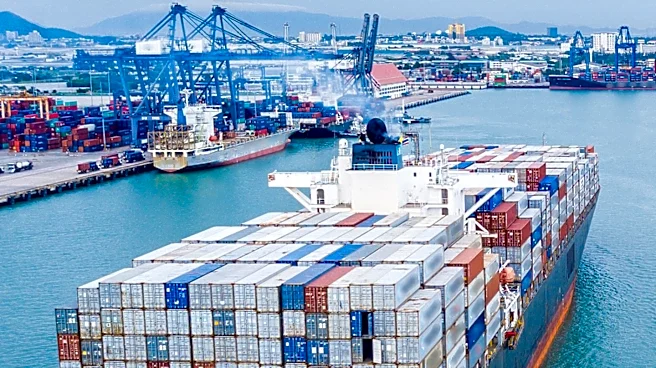
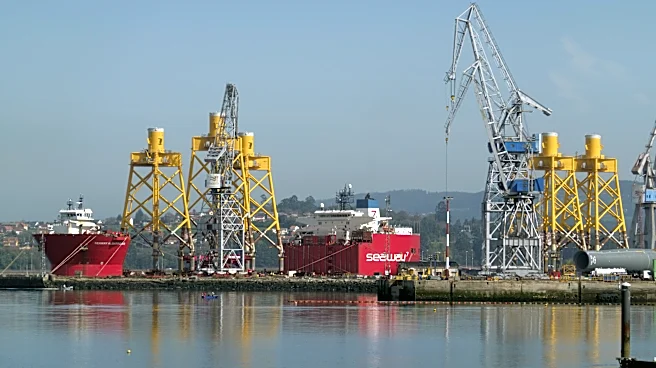
The European Union (EU) has announced a significant reduction in the amount of duty-free steel it will accept from non-EU countries, cutting the quota by half. However, the EU has provided more favorable terms to 13 countries with which it has free trade
agreements, including the United Kingdom. These countries will see their quotas reduced by only one-third. The move is part of the EU's strategy to curb the influx of cheap Chinese steel into the bloc. The new measures, effective from July 1, 2026, are designed to provide predictability and transparency in quota distribution, according to EU Trade Commissioner Maroš Šefčovič. The decision follows similar actions by the UK to reduce foreign imports and support domestic industries, marking a significant divergence in trade relations since Brexit.
Why It's Important?
This development is crucial as it reflects the EU's ongoing efforts to protect its steel industry from the impact of cheap imports, particularly from China. By offering better terms to countries with existing free trade agreements, the EU aims to balance its trade relationships while safeguarding its domestic market. The decision could have significant implications for the UK, which has been seeking to strengthen its trade ties post-Brexit. The reduced quotas may impact the UK steel industry, which has expressed concerns about the potential negative effects. Additionally, the move could influence global steel trade dynamics, as countries adjust to the new EU import restrictions.
What's Next?
The EU's decision to adjust steel import quotas may lead to further negotiations with affected countries to address potential supply shortages. The EU has indicated that quotas can be adjusted if necessary, suggesting ongoing flexibility in its trade policy. The UK and other affected countries may seek to negotiate further concessions or explore alternative markets to mitigate the impact of reduced quotas. Additionally, the EU's plans to establish a 'steel club' with the US and UK to protect domestic markets from unfair competition could gain momentum, potentially leading to new trade alliances and strategies.