

What's Happening?
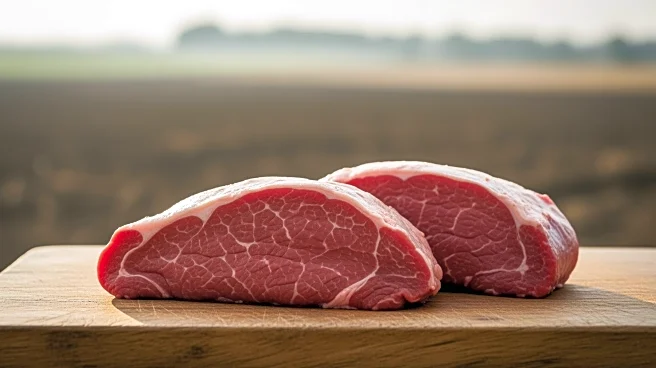
The U.S. Department of Agriculture (USDA) has reported a notable decline in red meat production for January, with beef output experiencing a significant drop. Beef production was recorded at 2.12 billion pounds, marking an 11% decrease from the previous
year. The decline is attributed to a 12% reduction in cattle slaughter, although the average live weight of cattle increased by 25 pounds to 1,464 pounds. Pork production also saw a 2% decrease, with hog slaughter down by 3%. Veal and lamb production experienced even steeper declines, with veal output dropping by 33% and lamb and mutton by 4%. These figures highlight ongoing challenges in the red meat industry, including supply chain disruptions and changing market dynamics.
Why It's Important?
The decline in red meat production has significant implications for the U.S. agricultural sector and consumers. Reduced beef and pork output can lead to higher prices for consumers and impact the profitability of meat producers. The decrease in slaughter numbers suggests potential supply chain issues, possibly exacerbated by labor shortages or logistical challenges. Additionally, the increase in average live weight indicates adjustments in feeding practices, which could affect production costs. These changes may influence market strategies and pricing, affecting stakeholders across the supply chain, from farmers to retailers.