







What's Happening?
Midland, Michigan, has introduced a new composting pilot program called 'Give A Scrap,' spearheaded by local businesses in partnership with Iris Waste Diversion Specialists. Unlike traditional home composting, which is often limited to plant-based items,
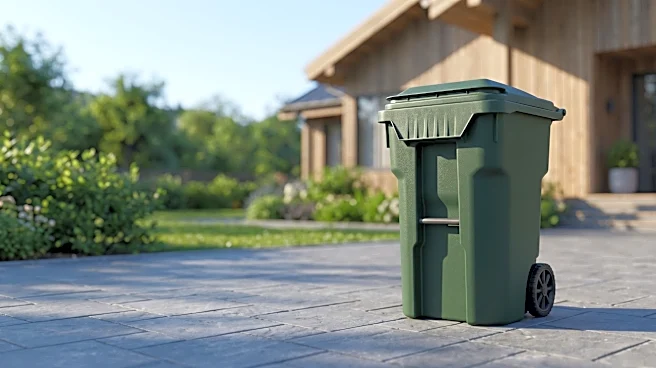
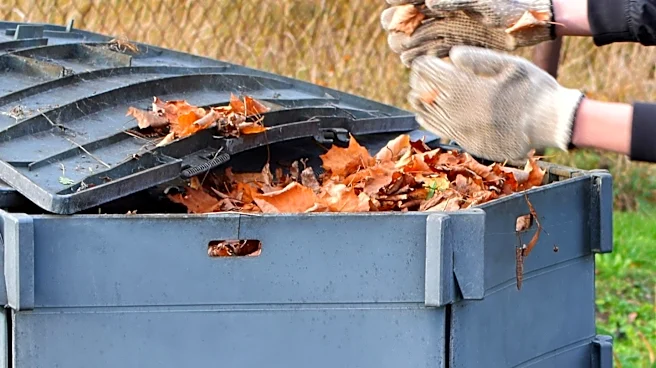
this new service accepts all types of food waste, including meats and dairy. Participants pay a monthly fee of $15 to access drop-off bins located at participating businesses, such as FILL, a local refillery owned by Kristen Cronkright. The program utilizes zero-emission vehicles to transport the collected waste to composting partners like 5Heart Earthworm Farm. Upon completion of their participation, users receive five pounds of nutrient-rich worm castings, a byproduct of the composting process, as a return on their investment. This initiative aims to divert food waste from landfills, where it breaks down slowly due to a lack of oxygen and microbiomes, contributing to environmental issues.
Why It's Important?
This program is important for several reasons. Firstly, it addresses the significant environmental impact of food waste in landfills. When food waste decomposes in anaerobic conditions (without oxygen), it produces methane, a potent greenhouse gas. By diverting all types of food waste, including meats and dairy, the 'Give A Scrap' program offers a more comprehensive solution than typical home composting, making it accessible to a wider range of households and businesses. Secondly, the program promotes a circular economy by transforming waste into a valuable resource: nutrient-rich worm castings. This fertilizer can improve soil health, reduce the need for synthetic fertilizers, and support local gardening and agriculture. Thirdly, the involvement of local businesses like FILL fosters community engagement and provides convenient drop-off points, encouraging broader participation in sustainable practices. The use of zero-emission vehicles for transportation further underscores the program's commitment to environmental stewardship, setting a precedent for other communities looking to implement similar waste diversion strategies.
What's Next?
The 'Give A Scrap' program is currently a pilot initiative, and its future expansion will likely depend on its success and community adoption in Midland. If the program proves effective in diverting a significant amount of food waste and generating positive community feedback, it could be scaled up to include more businesses and residents. The organizers will likely monitor participation rates, the volume of waste collected, and the production of worm castings to assess its impact. There is potential for other cities and towns to adopt similar models, especially given the program's ability to handle all food waste, which is a common challenge for many composting efforts. Continued public education on the benefits of composting and how to properly utilize the service will be crucial for sustained success and growth. The program's success could also inspire further partnerships between local businesses and waste diversion specialists, creating a more robust and decentralized composting infrastructure.
Beyond the Headlines
The 'Give A Scrap' program highlights a growing trend in local communities to address waste management challenges through innovative, community-driven solutions. Beyond the immediate environmental benefits of reducing landfill waste and producing fertilizer, this initiative fosters a deeper understanding of waste as a resource rather than merely trash. It encourages a shift in consumer behavior, prompting individuals to consider the lifecycle of their food and its potential for regeneration. The program also demonstrates the power of collaboration between small businesses and specialized waste management entities to create impactful change at a local level. This model could serve as a blueprint for other communities seeking to implement sustainable practices, emphasizing accessibility, convenience, and tangible benefits (like the worm castings) to encourage participation. It underscores the idea that effective environmental solutions often emerge from localized efforts tailored to specific community needs and resources.