




What's Happening?
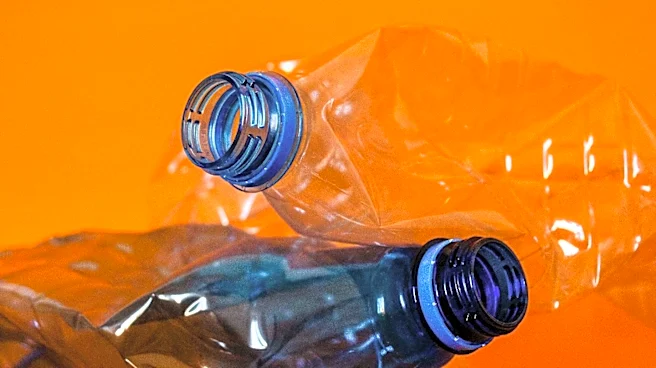
Scientists at Southern Illinois University (SIU) Carbondale, with funding from NASA, have successfully developed edible, protein-rich cookies from recycled plastic bottles and other biomass. This innovative process utilizes microbial fermentation to convert
waste materials, specifically polyethylene terephthalate (PET) from plastic bottles and plant waste, into food. The research team programmed various yeasts, including baker's yeast, to transform molecules from these waste products into proteins, vitamins, and flavorings. The process involves breaking down tough materials using oxidative hydrothermal dissolution, then feeding these pieces to the programmed yeasts. The resulting ingredients are then combined with fiber, starch, and sweeteners and extruded through a 3D printer to form 'µBites' (microbites). While taste tests are pending institutional approval, participants have given high marks for aroma and expressed willingness to consume them in resource-limited scenarios. The current production cost is $60 per kilogram, with efforts underway to reduce this through improved yeast efficiency and scaled-up production.
Why It's Important?
This development holds significant implications for addressing global food insecurity and supporting long-duration space missions. With global food demand projected to rise by 35-56% by 2050 and a substantial portion of the world's population at risk of hunger, this technology offers a novel approach to food production from unconventional sources. For space exploration, where resources are extremely limited, the ability to create food from waste could be a game-changer for astronauts on deep-space missions and potential colonies on the Moon or Mars. On Earth, these plastic-derived cookies could provide sustainable nutrition in extreme environments such as disaster zones and submarines. Furthermore, the technology offers a potential solution to the escalating problem of plastic pollution, which contributes significantly to global emissions and environmental degradation. By upcycling plastic waste into edible products, this research tackles two critical challenges simultaneously: food scarcity and environmental sustainability.
What's Next?
The SIU Carbondale team plans to further refine the process, aiming to produce the main ingredients of µBites, such as starch, fiber, and sweeteners, using microbes as well. This would make the product entirely derived from microbial conversion of waste. They anticipate that the plastic-derived food could be ready for public consumption within a few years, following further development and regulatory approvals. The researchers are also exploring ways to make the product more consumer-friendly, with graduate student Sandhya Jayasekara developing yeasts that can produce additional food additives, such as vanilla flavoring from plant biomass and beta-carotene from ethylene glycol (a component of PET). Scaling up production and improving yeast efficiency are key next steps to reduce the current cost of $60 per kilogram, making the product more economically viable for widespread adoption.
Beyond the Headlines
The concept of converting plastic waste into food raises profound ethical and societal questions regarding the acceptance of such novel food sources. While the scientific data indicates safety, public perception and trust will be crucial for widespread adoption. This innovation challenges traditional notions of food production and consumption, potentially paving the way for a circular economy where waste is not merely managed but transformed into valuable resources. The long-term health implications of consuming plastic-derived foods, even after microbial conversion, will require extensive and ongoing research. Moreover, the success of this technology could shift the economic landscape of waste management and food industries, creating new markets and potentially disrupting existing ones. It also highlights the increasing reliance on biotechnology and synthetic biology to address complex global challenges, pushing the boundaries of what is considered 'food' and 'sustainable'.