





What's Happening?
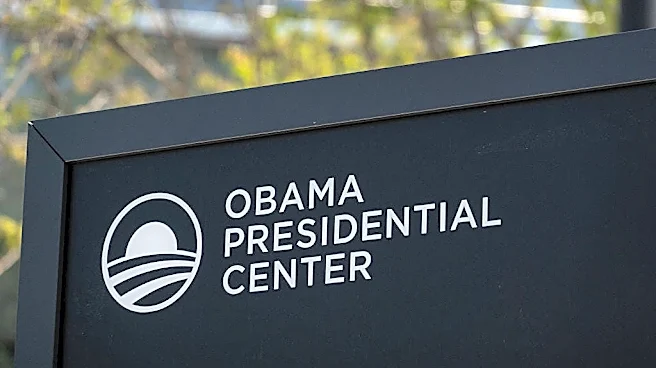
The Obama Presidential Center, a new cultural and educational landmark dedicated to former U.S. President Barack Obama, is set to open on June 19 in Chicago's South Side. The center spans 19.3 acres and includes a museum, library, and public park. The construction
of the center, which cost approximately $850 million, was funded through donations. The museum will feature campaign memorabilia and items from Obama's presidency, with an admission fee of $30, while the rest of the campus, including a community basketball court and public library, will be free to the public. The center aims to serve as a space for reflection on Obama's presidency and as a community hub for change and empowerment.
Why It's Important?
The opening of the Obama Presidential Center is significant as it represents a major cultural and historical addition to Chicago, honoring the legacy of the first Black U.S. president. It is expected to attract visitors from across the country and around the world, potentially boosting local tourism and the economy. The center also aims to inspire civic engagement and community development, aligning with the Obama Foundation's mission to empower individuals to effect change in their communities. However, the project has faced criticism, notably from President Trump, who has disparaged the design and construction of the center.
What's Next?
As the center opens, it will likely become a focal point for educational programs and community events, fostering dialogue on social and political issues. The Obama Foundation plans to use the center as a platform to promote civic engagement and leadership development. The center's impact on the local community and its role in shaping public discourse on Obama's legacy will be closely watched. Additionally, reactions from political figures and the public will continue to shape the narrative around the center's significance.
Beyond the Headlines
The Obama Presidential Center's establishment raises broader questions about the role of presidential libraries and centers in preserving and interpreting historical legacies. It also highlights ongoing debates about public funding for cultural institutions and the influence of private donations in shaping public spaces. The center's focus on community engagement and empowerment reflects a growing trend in cultural institutions to serve as active participants in social change, rather than merely preserving history.