
What's Happening?
The winter of 2026 has brought significant weather disruptions across the United States, impacting travel and tourism. Heavy snowfall has affected states like Maine, Massachusetts, Vermont, and Minnesota,
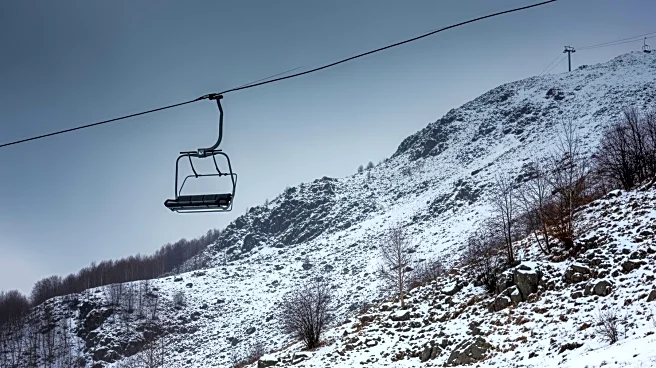
causing travel chaos and affecting local communities. In contrast, regions in the Western U.S., including Colorado and parts of the Pacific Northwest, are experiencing a 'snow drought' due to record-warm temperatures, leading to minimal snowfall at lower elevations. This has disrupted plans for winter sports enthusiasts. Meanwhile, the Midwest and Great Lakes regions continue to experience light snow showers, posing challenges for drivers. The tourism industry is facing economic consequences as these weather conditions affect visitor numbers, creating a winter season of contrasts for both visitors and local economies.
Why It's Important?
The contrasting weather patterns across the U.S. have significant implications for the tourism industry. Heavy snowfall in the Northeast and Midwest can deter travelers, impacting local economies reliant on winter tourism. Conversely, the snow drought in the West threatens ski resorts and related businesses, which depend on consistent snowfall to attract visitors. The economic impact is substantial, as tourism supports jobs and generates significant revenue in these regions. The ability of local economies to adapt to these weather challenges will be crucial in maintaining their economic stability. The situation highlights the broader issue of climate variability and its impact on industries dependent on predictable weather patterns.
What's Next?
As the winter season progresses, regions affected by heavy snowfall will need to manage travel disruptions and ensure safety for residents and visitors. In the West, ski resorts may need to rely more on artificial snowmaking to maintain operations. Tourism agencies will likely focus on promoting attractions that are less dependent on weather conditions. The ongoing weather patterns may prompt discussions on infrastructure improvements to better handle extreme weather events. Additionally, businesses and local governments may need to develop strategies to mitigate the economic impact of these weather challenges, ensuring resilience in the face of climate variability.