

What's Happening?
Researchers from the University of Oxford, University of Cambridge, McGill University, University of Aarhus, and Pompeu Fabra University have conducted a study on the dynamics of the mammalian brain, focusing on the balance between cooperative and competitive
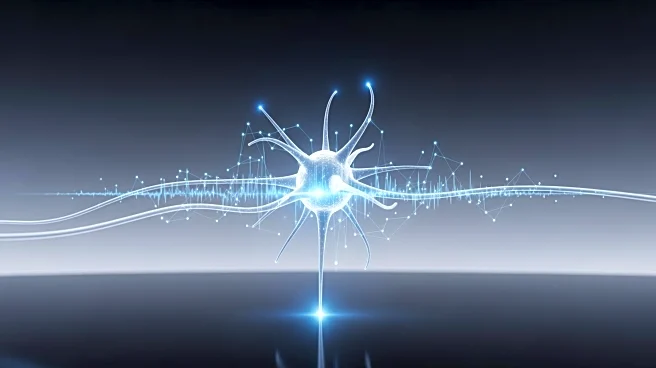
interactions among neural circuits. Published in Nature Neuroscience, the study highlights that traditional brain models, which emphasize cooperative interactions, may not fully capture the brain's complexity. Instead, models incorporating competitive interactions, where brain regions can either excite or suppress each other's activity, offer a more realistic representation. These competitive interactions prevent runaway activity and allow different brain systems to take turns in shaping the brain's activity, leading to more accurate and individual-specific models.
Why It's Important?
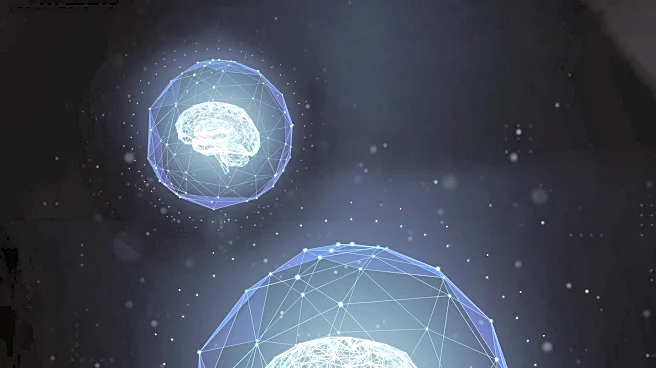
The findings of this study have significant implications for neuroscience research and the development of brain-inspired computational models. By incorporating competitive interactions, these models can better mimic the unique 'brain fingerprint' of individuals, which is crucial for the development of digital twins—virtual replicas of specific individuals' brains. Such advancements could enhance personalized medicine by allowing for virtual testing of treatments before real-world application. Furthermore, understanding the principles of brain organization across species could inform the creation of more human-like artificial intelligence systems, potentially leading to breakthroughs in AI technology.
What's Next?
Future research may focus on using competitive brain models to predict treatment effects in patients, advancing personalized medicine. Additionally, the principles derived from this study could guide the development of next-generation AI systems, leveraging the understanding of intelligent architectures. As digital twins become more prevalent, ensuring these models accurately reflect individual brain organization will be critical to their success in medical and technological applications.