








What's Happening?
The Scott administration in Vermont is implementing a new strategy to address homelessness and quality-of-life concerns in Montpelier. Following earlier efforts that included deploying state Troopers to Burlington, officials are now using bird-noise devices
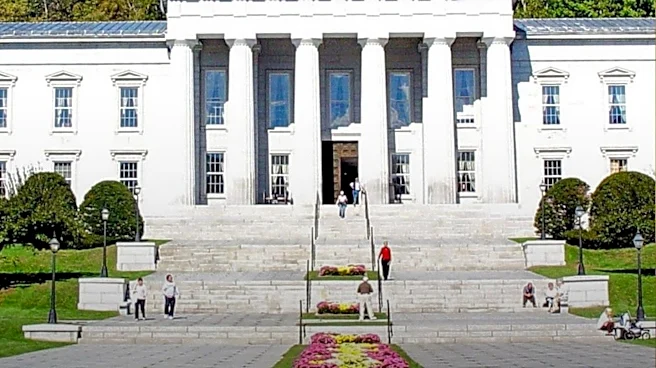
at the historic Pavilion building within the Capitol complex. These devices are intended to deter individuals from gathering on the porch, where incidents such as fights, discarded syringes, human waste, and a fire have been reported. The bird squawking devices will operate between 11 p.m. and 4 a.m. This measure comes after previous attempts, including portable toilets and signs requesting people not to gather, proved ineffective. Governor Phil Scott stated that the alternative would be arrests, which the administration aims to avoid. This initiative is part of a broader approach by the Scott administration to manage public spaces and address issues related to the unhoused population.
Why It's Important?
This development highlights the ongoing challenges faced by U.S. cities and states in managing homelessness and public order, particularly in sensitive areas like state capitol complexes. The use of non-lethal, auditory deterrents like bird-noise devices represents an unconventional approach to a complex social issue. While officials aim to prevent undesirable activities without resorting to arrests, the effectiveness and ethical implications of such methods are often debated. Local homeless providers, such as Another Way Executive Director Ken Russell, criticize this approach as an 'absurd response to a systemic issue,' arguing that it merely displaces the problem rather than solving it. The situation underscores the tension between maintaining public safety and order, and providing compassionate and effective solutions for vulnerable populations. The economic impact on Burlington, described by Governor Scott as the state's economic powerhouse, is also a factor, as the administration seeks to maintain a positive national reputation for the state's largest city.
What's Next?
The bird-noise devices are now in operation, and their impact on deterring loitering at the Capitol complex will be observed. The effectiveness of this measure will likely be evaluated by state officials, and public reaction, particularly from homeless advocates and local residents, will continue to shape the discourse. As colder weather approaches, the focus will also shift to the availability and capacity of shelters in Burlington and Montpelier, as providers are actively working to secure sufficient resources for the fall. The ongoing debate between law enforcement-centric solutions and social service-oriented approaches to homelessness is expected to persist. Future policy decisions by the Scott administration regarding public space management and support for the unhoused population will likely be influenced by the outcomes of these current initiatives and the feedback from various stakeholders.
Beyond the Headlines
The deployment of bird-noise devices at the Vermont Capitol complex raises deeper questions about the societal approach to homelessness and public space management. This method, while seemingly benign, can be viewed as a form of 'hostile architecture' or 'defensive design,' which aims to make public spaces uncomfortable or unusable for certain groups, particularly the unhoused. Such strategies often push vulnerable populations to other areas without addressing the root causes of homelessness, such as lack of affordable housing, mental health services, and economic opportunities. The ethical dimension of using technology to deter human presence, rather than engaging with the underlying social issues, is a significant concern. It also reflects a broader trend in urban planning where the aesthetics and perceived safety of public spaces are prioritized, sometimes at the expense of inclusive and humanitarian solutions for all citizens. The long-term implications could include further marginalization of homeless individuals and a continued cycle of displacement, rather than sustainable community integration.