



What's Happening?
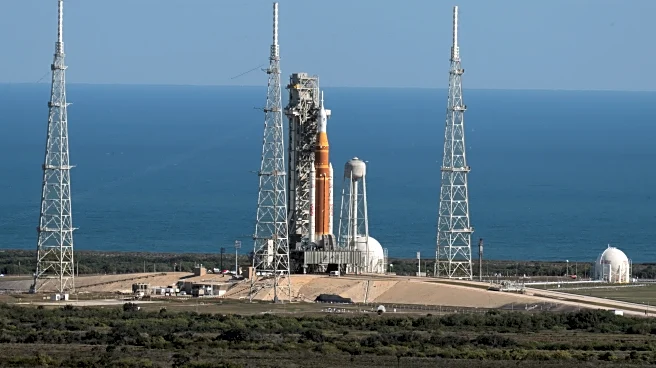
NASA's Artemis 2 mission is set to send astronauts Reid Wiseman, Victor Glover, Christina Koch, and Canada's Jeremy Hansen on a 10-day journey around the moon. This mission marks the first crewed lunar trip since Apollo 17 in 1972. The astronauts have
expressed a desire for their mission to be remembered as a stepping stone for future space exploration, rather than a standalone achievement. They hope to enable subsequent missions, including Artemis 3, which aims to land astronauts on the lunar surface by 2028, and eventually pave the way for human exploration of Mars. The launch is scheduled for February 8, 2026, from Kennedy Space Center in Florida, contingent on successful prelaunch checks.
Why It's Important?
The Artemis 2 mission is a critical component of NASA's broader Artemis program, which seeks to establish a sustainable human presence on the moon by 2030. This mission not only represents a significant technological and logistical achievement but also serves as a precursor to more ambitious endeavors, such as establishing a lunar base and conducting crewed missions to Mars. The success of Artemis 2 could bolster international collaboration in space exploration and inspire advancements in technology and science. It also underscores the strategic importance of space exploration in maintaining technological leadership and fostering innovation.
What's Next?
Following the Artemis 2 mission, NASA plans to proceed with Artemis 3, which aims to land astronauts on the moon's surface in 2028. Future missions will focus on establishing a lunar base, which will serve as a hub for scientific research and a stepping stone for Mars exploration. The success of Artemis 2 will be pivotal in securing funding and international partnerships for these subsequent missions. Additionally, the mission's outcomes could influence public and political support for continued investment in space exploration.