




What's Happening?
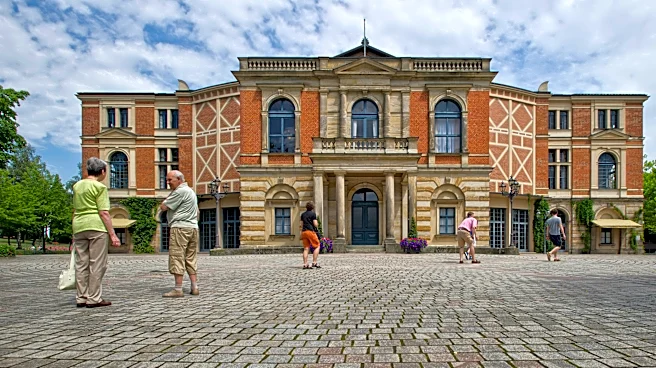
The 150th anniversary of Richard Wagner's Ring Cycle at the Bayreuth Festival featured an AI-driven production titled '10010110: From Myth to Code.' The innovative staging, which used artificial intelligence to select scenery, received mixed reactions
from the audience. While the production aimed to integrate historical and modern elements, it faced criticism for lacking cohesive drama. The AI utilized images from previous Bayreuth productions and incorporated historical and political references, such as images of Theodor Herzl and Adolf Hitler. Despite the boos, the performance concluded with a 17-minute ovation, reflecting the audience's divided opinion.
Why It's Important?
This AI-driven production highlights the growing intersection of technology and the arts, showcasing how artificial intelligence can be used to reinterpret classic works. The mixed reception underscores the challenges and opportunities of integrating AI into traditional art forms. While some view it as a groundbreaking experiment, others see it as lacking the emotional depth of human-directed performances. This event raises questions about the future of AI in the arts and its potential to both enhance and disrupt traditional practices. It also reflects broader societal debates about the role of technology in creative fields.
What's Next?
The reception of the AI-driven Ring Cycle may influence future productions at the Bayreuth Festival and beyond. As technology continues to advance, more artists and institutions might experiment with AI to create innovative performances. However, the mixed reactions suggest that audiences may require time to adjust to such changes. Future productions might focus on finding a balance between technological innovation and maintaining the emotional and narrative depth that audiences expect. The festival's organizers may also consider audience feedback to refine the use of AI in future performances.