
What's Happening?
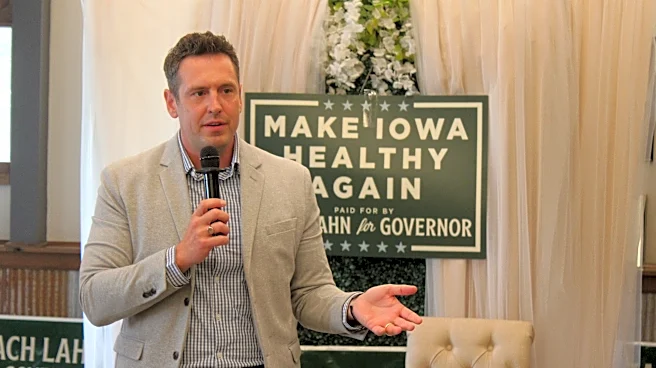
In the latest round of midterm primaries, President Trump's endorsement power faced a rare setback in Iowa. Despite his backing, Rep. Randy Feenstra lost the Republican primary for governor to Zach Lahn.
This development is significant as Trump's endorsements have previously been influential in shaping Republican outcomes. The primaries also saw Democrats nominating Rob Sand, who ran unopposed, for the gubernatorial race. Sand, with rural roots and a history of winning in a Republican-leaning state, is seen as a strong contender. The primaries across several states, including California and New Jersey, highlighted key races that could impact control of the Senate and governorships.
Why It's Important?
The setback for President Trump in Iowa is notable as it challenges the perceived invincibility of his endorsement in Republican primaries. This could signal a shift in the Republican landscape, where candidates may not solely rely on Trump's backing to secure victories. For Democrats, the primaries are crucial as they aim to regain control of the Senate and secure governorships. The outcomes in states like Iowa and New Jersey are pivotal for both parties as they strategize for the general elections. The results could influence party dynamics and voter mobilization efforts leading up to November.
What's Next?
As the general elections approach, both parties will focus on consolidating support and addressing key issues that resonate with voters. For Republicans, the challenge will be to navigate the influence of Trump's endorsements while appealing to a broader electorate. Democrats, on the other hand, will aim to capitalize on any divisions within the Republican ranks and present a unified front. The upcoming elections will test the strategies of both parties and could reshape the political landscape depending on the outcomes in key battleground states.