








What's Happening?
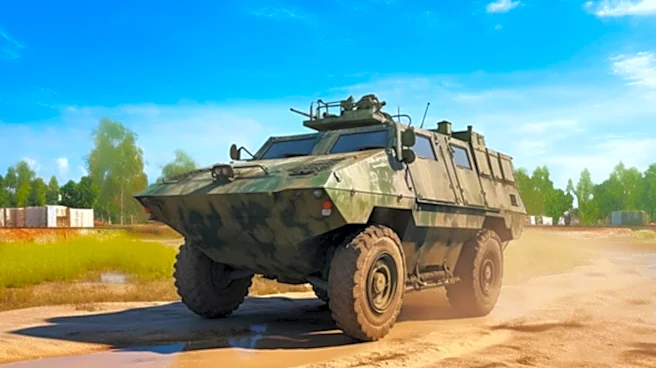
Tencore, a Ukrainian manufacturer of unmanned ground vehicles (UGVs), has reported that only a small number of its UGVs are currently being used in combat roles in Ukraine. According to Roman Tkachenko, co-founder and chief business development officer
of Tencore, the majority of these vehicles are deployed for logistics missions. Tencore has delivered over 4,000 UGVs to the Armed Forces of Ukraine (AFU), with some equipped with remote weapon stations (RWSs) from partner companies. The TERMIT 2.0 UGV, a notable model from Tencore, can be fitted with various weapons, including the MK19 40 mm grenade launcher and machine guns. Despite the limited use in combat, Tkachenko emphasized that the role of UGVs in combat is expected to grow over time.
Why It's Important?
The deployment of UGVs in Ukraine underscores the evolving nature of warfare, where technology plays a crucial role in logistics and combat operations. The limited use of UGVs in combat roles suggests a strategic focus on enhancing logistical capabilities, which are vital for sustaining military operations. This development could influence military strategies globally, as other nations observe the effectiveness of UGVs in logistical support. The integration of advanced weaponry on these vehicles also highlights the potential for increased automation in combat scenarios, which could lead to shifts in military tactics and the reduction of human casualties.
What's Next?
As the conflict in Ukraine continues, the role of UGVs is likely to expand, with potential increases in their deployment for combat missions. This could prompt further innovation and investment in UGV technology, both within Ukraine and internationally. Military strategists and defense companies may explore new applications for UGVs, potentially leading to advancements in autonomous warfare technology. Additionally, the success of UGVs in logistics could encourage other countries to adopt similar technologies, reshaping military logistics and combat strategies worldwide.
Beyond the Headlines
The use of UGVs in Ukraine raises ethical and legal questions about the automation of warfare. As these technologies become more prevalent, there will be increased scrutiny on the rules of engagement and the accountability of autonomous systems in combat. The potential for UGVs to reduce human involvement in dangerous missions is significant, but it also necessitates discussions on the moral implications of machine-led warfare. Furthermore, the integration of UGVs into military operations could lead to long-term changes in military training and the skill sets required for future soldiers.