



What's Happening?
The German Federal Ministry of Defence (BMVg) has announced the approval of additional procurements for the German Army, including the Sturmgewehr G95 assault rifles, intercom sets, and Wolf all-terrain vehicles. This decision follows the Bundestag budget
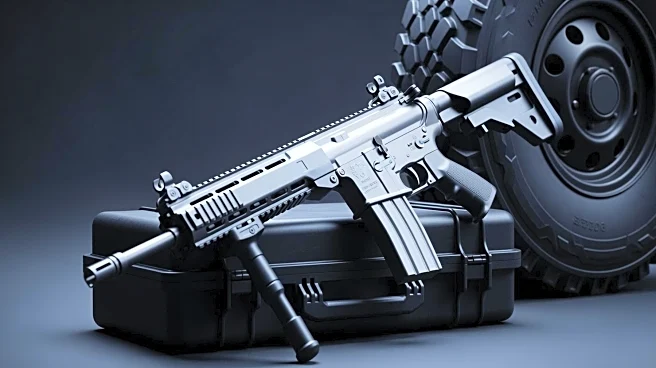
committee's previous approval in 2022 for nearly 120,000 G95 rifles. The G95, a Heckler & Koch HK416A8 model, is set to replace the older G36 rifles, featuring advanced combat sights and laser light modules. The Panzergrenadierbataillon 122, an Armoured Infantry Battalion, is the first unit to receive the G95 rifles, marking a significant upgrade in their equipment. Additionally, the procurement includes intercom sets with integrated hearing protection and Wolf vehicles equipped with the Digitalization of Land-Based Operations system. These procurements are part of a broader effort to modernize the Bundeswehr's capabilities.
Why It's Important?
This procurement marks a significant step in modernizing the German military's equipment, enhancing their operational capabilities. The introduction of the G95 rifles and advanced communication systems is expected to improve the effectiveness and safety of German troops. The modernization efforts reflect Germany's commitment to strengthening its defense capabilities amid evolving global security challenges. The procurement of Wolf vehicles and semi-trailers further supports logistical and operational efficiency, crucial for rapid deployment and mobility. These developments could influence Germany's role within NATO and its ability to contribute to international security operations.
What's Next?
The German Army will continue to integrate the new equipment into its units, with deliveries of the intercom sets and vehicles expected in 2026-2027. The focus will be on training personnel to effectively use the new systems, ensuring a smooth transition and maximizing the benefits of the upgraded equipment. The ongoing modernization may prompt further investments in defense technology, potentially leading to collaborations with other NATO members. The strategic implications of these upgrades will likely be monitored by international defense analysts and policymakers.