







What's Happening?
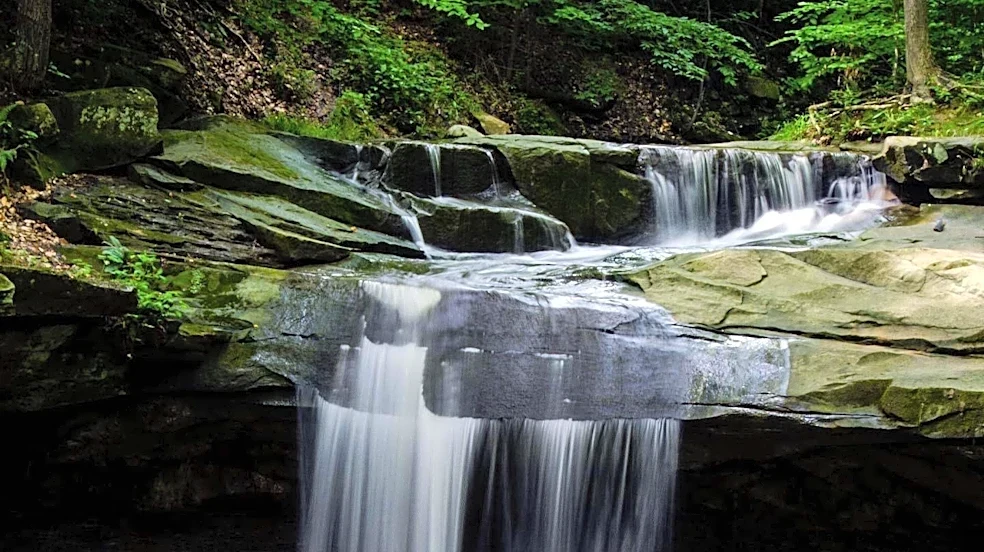
Cascade Falls Park in Concord Township, Ohio, part of the Lake Metroparks system, features a one-mile woodland trail leading to a 60-foot plunge waterfall. The hike begins at a parking area on Girdled Road, with the initial half-mile being a relatively
easy gravel path through a hardwood forest. As the trail progresses, it approaches a steep ravine carved by East Creek, showcasing geological formations from thousands of years of erosion. The final section of the trail descends more steeply towards an observation deck overlooking the waterfall. Hikers are advised to remain on the designated trail and viewing platform for safety and to protect the fragile landscape. The park is noted for its secluded atmosphere, despite being close to Painesville, and offers impressive natural scenery, especially after heavy rainfall or during spring snowmelt when the waterfall's flow is strongest. The area also has historical ties to Ohio's Connecticut Western Reserve.
Why It's Important?
The preservation and accessibility of natural areas like Cascade Falls Park are crucial for public recreation and environmental education. Such parks provide residents with opportunities for outdoor activity, promoting physical and mental well-being. The park's geological features offer insights into the region's natural history, demonstrating the long-term effects of erosion on sedimentary bedrock. Furthermore, the park's connection to the Connecticut Western Reserve highlights the historical development of Northeast Ohio, linking natural landscapes with early American settlement. Maintaining these natural spaces contributes to local biodiversity and offers a refuge for wildlife, while also serving as a valuable resource for tourism and local economies by attracting visitors seeking natural beauty and outdoor experiences. The emphasis on staying on designated trails also underscores the importance of responsible recreation and conservation efforts.
What's Next?
Visitors planning to hike at Cascade Falls Park should consider timing their visit after significant rainfall or during spring to experience the waterfall at its most impressive flow. Continued maintenance of the trails and viewing platforms will be essential to ensure visitor safety and preserve the natural integrity of the park. Lake Metroparks may continue to offer interpretive programs or educational materials to enhance visitors' understanding of the park's geology, ecology, and history. As the park gains popularity, managing visitor impact through signage and enforcement of trail rules will be important to prevent degradation of the natural environment. Future initiatives could also involve further research into the park's geological and ecological aspects to better inform conservation strategies.
Beyond the Headlines
The existence of a significant natural feature like Cascade Falls so close to an urban area like Painesville underscores the importance of urban green spaces and accessible natural retreats. This park serves as a reminder of the geological forces that have shaped the landscape over millennia, offering a tangible connection to Earth's ancient processes. The park's historical context, being part of the Connecticut Western Reserve, also subtly links the natural environment to the narrative of American expansion and settlement, where natural resources played a pivotal role in the development of communities. The park's designation as a 'plunge waterfall' rather than a 'cascade' highlights the precise classifications used in geology, which can deepen public appreciation for the nuances of natural phenomena. Such parks often foster a sense of local pride and environmental stewardship among residents, encouraging broader conservation efforts.