






What's Happening?
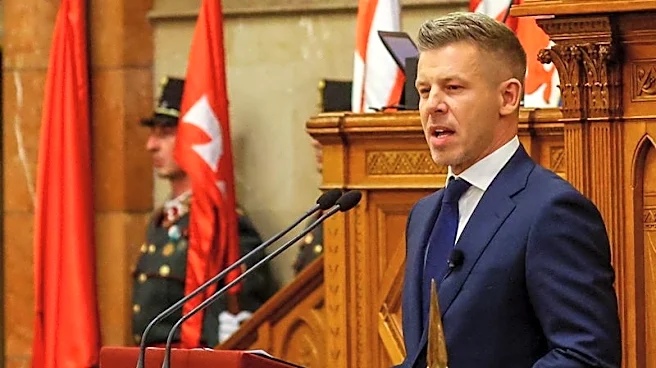
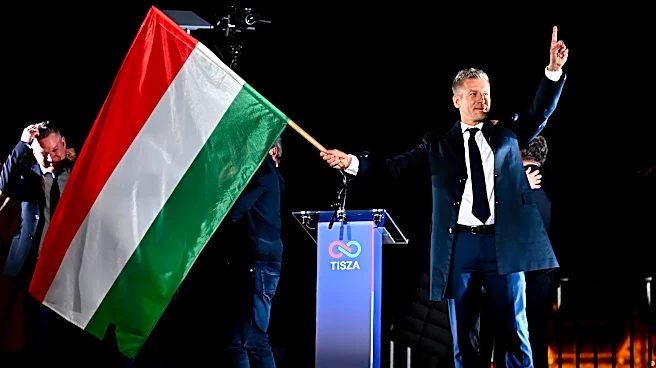
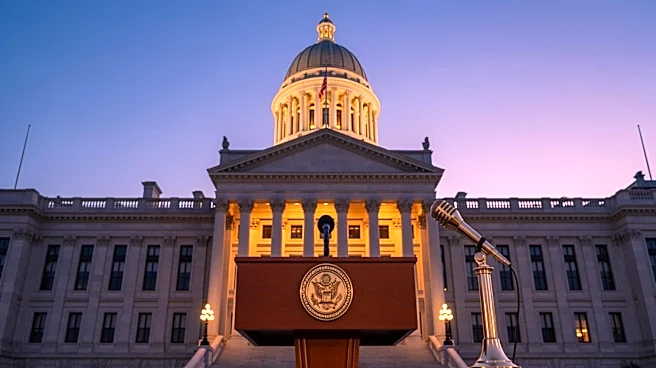
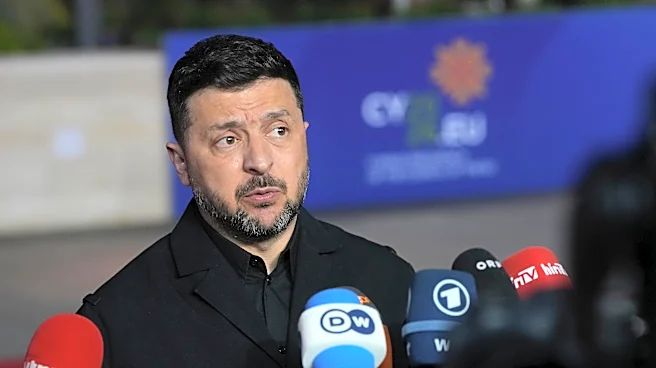
Peter Magyar has been inaugurated as Hungary's new prime minister following a decisive victory in the parliamentary elections, which concluded Viktor Orban's 16-year tenure. Magyar, leading the center-right Tisza party, secured a significant parliamentary majority,
winning 141 out of 199 seats. His rise to power is marked by promises of economic revival and improved relations with the European Union, which had been strained under Orban's leadership. The new administration aims to address economic stagnation and a substantial budget deficit, while also seeking to unlock approximately $20 billion in EU funds that were previously frozen due to concerns over human rights and rule of law issues during Orban's rule.
Why It's Important?
Magyar's leadership represents a pivotal shift in Hungary's political landscape, potentially altering its relationship with the European Union. Under Orban, Hungary had distanced itself from the EU, aligning more closely with Moscow and opposing EU sanctions on Russia. Magyar's administration is expected to pursue a more EU-friendly approach, which could restore Hungary's standing within the bloc and unlock significant financial resources. This change could have broader implications for EU politics, as Hungary's alignment may influence regional dynamics and EU policy-making. The economic reforms promised by Magyar could also impact Hungary's domestic economy, potentially improving living standards and reducing the budget deficit.
What's Next?
Magyar faces the challenge of differentiating his administration from Orban's, particularly in terms of governance and international relations. Re-establishing trust with the EU will be crucial, as will addressing the bureaucratic legacy left by Orban. The new government is expected to focus on diplomatic efforts to build new alliances within the EU and negotiate the release of frozen funds. Domestically, Magyar will need to implement economic policies that address the budget deficit and stimulate growth. The success of these initiatives will likely determine the stability and longevity of his administration.