






What's Happening?
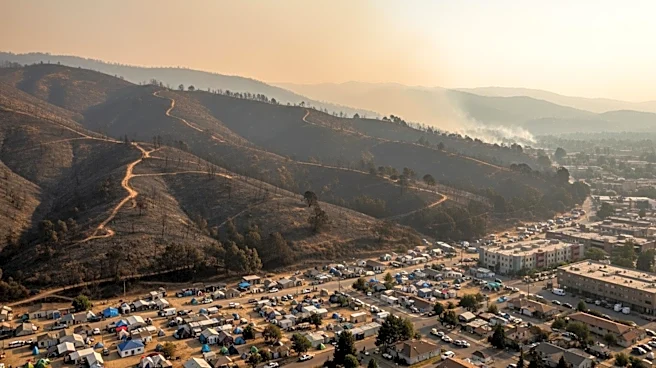
Recent studies led by UCLA researchers have highlighted the severe impact of the 2025 Los Angeles County wildfires on homelessness. The wildfires, which resulted in the loss of homes for approximately 200,000 people, also significantly affected those
already experiencing homelessness. According to the studies, more than three-quarters of the homeless population in the affected areas reported injuries or major disruptions due to the fires. The research underscores the compounded challenges faced by the homeless during climate disasters, as they are more vulnerable to the effects of such events. The studies also found that smoke exposure during the fires worsened respiratory symptoms for 40% of the unsheltered individuals surveyed. Additionally, the research indicates that climate-related events contribute to a 1% increase in homelessness for every 10,000 homes lost.
Why It's Important?
The findings from these studies are crucial as they reveal the intersection of climate disasters and homelessness, highlighting a predictable consequence of such events. The research suggests that homelessness is not only a chronic housing issue but also a disaster in itself, exacerbated by climate-related events. This has significant implications for public policy and emergency response systems, emphasizing the need for better coordination between these systems and homeless services. The studies also point to the importance of maintaining eviction protections, as they have been shown to mitigate potential increases in homelessness. The broader impact of these findings could influence future policy decisions aimed at reducing homelessness and improving disaster response strategies.
What's Next?
The studies suggest that immediate policy responses and broader efforts are needed to reduce the risk of homelessness before and after disasters. This includes closer coordination between emergency response systems and homeless services to better protect vulnerable populations during future disasters. The research also calls for the implementation of street medicine teams and mobile clinics to provide direct medical care to the homeless, as well as the establishment of mutual-aid networks to disseminate information effectively. These measures could help bridge the gap in support for the homeless during disasters and reduce the chronic instability that hinders their progress toward housing and healthcare.