


What's Happening?
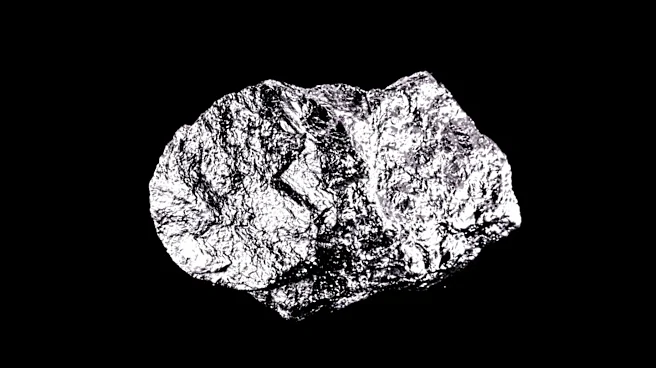
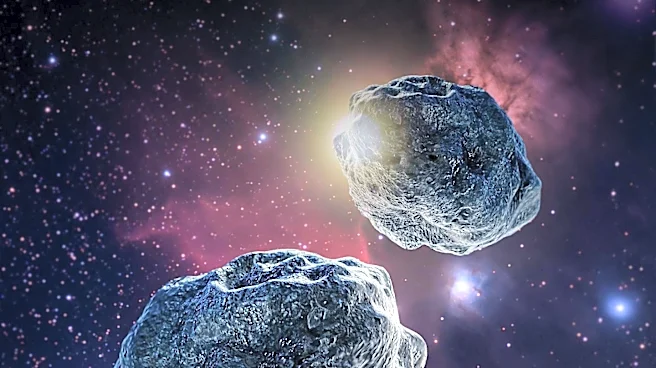
Astronomers have discovered a unique three-lobed asteroid named Nysa, located in the main asteroid belt. Using high-resolution images from ESO’s Very Large Telescope and the Large Binocular Telescope, researchers identified Nysa's unusual trilobate structure,
which is unlike any other known asteroid. The asteroid is composed of three distinct lobes connected by narrower sections, or 'necks.' This discovery was made possible through advanced imaging techniques and adaptive optics, which allowed astronomers to capture detailed images of Nysa's structure.
Why It's Important?
The discovery of Nysa's unique structure provides new insights into asteroid formation and the history of our solar system. Understanding the composition and formation of such asteroids can offer clues about the early solar system and the processes that shaped planetary bodies. This finding could also have implications for future asteroid exploration missions and the study of potential asteroid impacts on Earth. The research highlights the importance of advanced astronomical techniques in uncovering the mysteries of space.
What's Next?
Further research is needed to determine the exact formation process of Nysa. Scientists are considering two main hypotheses: Nysa could be a single object deformed by collisions or a composite of three objects that merged. Future observations and studies will aim to clarify these possibilities. The findings will be published in the journal Astronomy & Astrophysics, contributing to the broader understanding of asteroid dynamics and composition.