

What's Happening?
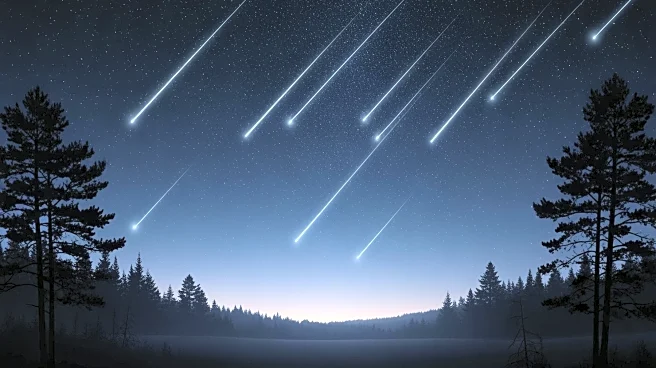
The Perseids meteor shower is anticipated to peak on August 12-13, 2026, under optimal viewing conditions due to a new moon. This annual meteor shower, known for its reliability and high meteor rate, is caused by debris from Comet 109P/Swift-Tuttle. Observers
can expect to see approximately one meteor per minute during the peak. The Perseids are one of the most widely observed meteor showers, second in richness only to the Geminids in December. The shower begins in late July and tapers off quickly after the peak. The Perseids have been recognized as an annual event since the 1830s, and during the shower, observers might also spot Delta Aquariids or Kappa Cygnids.
Why It's Important?
The Perseids meteor shower is a significant event for both amateur and professional astronomers, as well as the general public. It provides an opportunity for skywatchers to engage with astronomy and appreciate celestial phenomena. The shower's timing during the summer vacation season allows more people to observe it from rural areas with minimal light pollution. This event also highlights the ongoing interest in space and astronomy, fostering educational opportunities and public engagement with science. The Perseids' predictability and visibility make it a key event in the annual astronomical calendar.
What's Next?
As the Perseids approach, astronomers and enthusiasts will prepare for optimal viewing by selecting dark, rural locations away from city lights. Public events and gatherings may be organized to facilitate communal viewing experiences. Educational institutions and observatories might offer programs to educate the public about meteor showers and their origins. The event also serves as a reminder of the importance of preserving dark skies for astronomical observations, potentially influencing policies on light pollution.
Beyond the Headlines
The Perseids meteor shower underscores the cultural and scientific significance of celestial events. It encourages a broader appreciation for the natural world and our place within the solar system. The event also highlights the importance of scientific literacy and the role of astronomy in understanding cosmic phenomena. As people gather to watch the Perseids, it fosters a sense of community and shared wonder, bridging cultural and geographical divides.