




What's Happening?
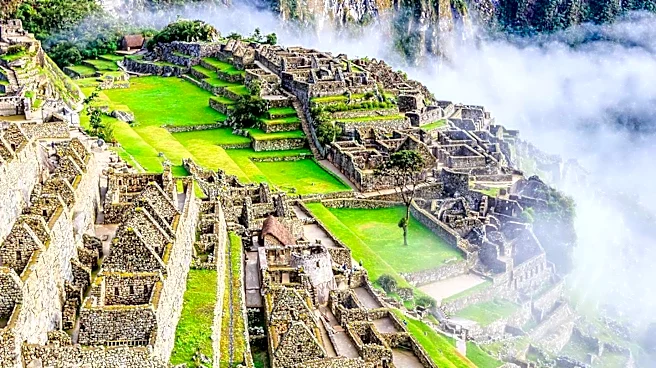
Peru is moving forward with the construction of the Chinchero International Airport, located approximately 36 miles from Machu Picchu, with a target opening in late 2027 or early 2028. This project has faced significant delays and opposition from activists,
archaeologists, and conservationists. The new airport is projected to increase tourism to the area by 200%, allowing visitors to bypass a flight connection in Lima and potentially fly directly from the United States and Europe. Passengers will land between Cusco and Ollantaytambo, the departure point for trains to Machu Picchu. While proponents anticipate economic benefits for rural communities in the Sacred Valley, many express concerns that the increased influx of travelers will exacerbate overtourism, potentially damaging the region's environment, archaeological sites, and cultural authenticity, which are already at capacity.
Why It's Important?
The development of the Chinchero International Airport holds significant implications for U.S. travelers and the global tourism industry. By enabling direct flights from the United States, the airport aims to make Machu Picchu and the Sacred Valley more accessible, potentially boosting tourism revenue and creating economic opportunities for local communities. However, this increased accessibility also brings the risk of overtourism, which could degrade the very attractions that draw visitors. For U.S. tourists, this could mean more crowded sites, diminished experiences, and potential environmental impacts on a globally recognized heritage destination. The situation highlights a broader challenge in the tourism sector: balancing economic growth with the preservation of natural and cultural resources, a dilemma that many popular destinations worldwide are currently grappling with.
What's Next?
The Chinchero International Airport is slated to open in late 2027 or early 2028. As the construction progresses, stakeholders will likely continue to monitor and debate the potential impacts of increased tourism. Local authorities and tourism organizations may need to implement new strategies to manage visitor flow, protect archaeological sites, and preserve the cultural authenticity of the Sacred Valley. This could include measures such as visitor quotas, enhanced infrastructure for waste management, and educational campaigns for tourists. The success of these efforts will determine whether the region can effectively balance economic development with environmental and cultural preservation in the face of a projected 200% increase in tourist arrivals.
Beyond the Headlines
The controversy surrounding the Chinchero International Airport project underscores a critical ethical and cultural dilemma in global tourism. While economic development is often a primary driver for such infrastructure projects, the long-term consequences for indigenous cultures and fragile ecosystems are often overlooked or underestimated. The Sacred Valley and Machu Picchu are not just tourist attractions; they are sites of profound historical, spiritual, and ecological significance. The potential for overtourism to erode cultural authenticity and cause irreversible environmental damage raises questions about the responsibility of both host countries and international travelers. This situation could serve as a case study for how future large-scale tourism developments are planned and managed, emphasizing the need for comprehensive impact assessments and sustainable tourism practices that prioritize preservation alongside economic gain.