







What's Happening?
The Iowa Agriculture Literacy Foundation (IALF) has opened applications for its Teacher Supplement Grant program, providing up to $250 to Pre-K-12 teachers, school librarians, qualifying after-school programs, and Homeschool Assistance Programs. These
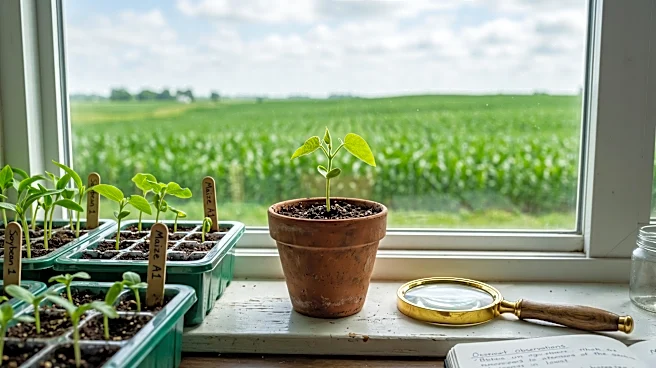
grants are designed to support classroom projects that integrate agriculture with various subjects such as science, math, language arts, and social studies. The funding can be utilized for a range of educational resources, including books, classroom materials, educational kits, guest speakers, and field trips. Projects could encompass topics like plant life cycles, crop yields, food production, or Iowa’s agricultural history. According to Kelly Foss, the foundation’s executive director, the grants aim to transform teachers' innovative ideas into practical, hands-on learning experiences, addressing the challenge of securing resources for such initiatives. The application deadline for these grants is November 29, with funded projects scheduled to be implemented during the winter and spring 2027 semester. Last year, the IALF awarded 118 grants across 50 Iowa counties, benefiting over 7,100 students by fostering agricultural learning.
Why It's Important?
This grant program is important for enhancing agricultural literacy among Iowa's youth, a critical aspect given the state's significant agricultural economy. By integrating agricultural concepts into core subjects, students gain a deeper understanding of where their food comes from, the science behind farming, and the economic impact of agriculture. This initiative helps bridge the gap between theoretical classroom learning and real-world applications, potentially inspiring future generations to pursue careers in agriculture or related fields. For teachers, the grants alleviate financial burdens associated with developing engaging, hands-on lessons, allowing them to implement creative educational strategies that might otherwise be unfeasible. The program also supports the broader goal of fostering an informed citizenry capable of making sound decisions regarding food systems and environmental stewardship. The success of last year's program, reaching over 7,100 students, underscores the demand and positive impact of such funding on educational outcomes and community engagement.
What's Next?
Teachers and eligible educational programs in Iowa have until November 29 to submit their applications for the Teacher Supplement Grant program. Following the application period, the Iowa Agriculture Literacy Foundation will review proposals and award grants. The funded projects are slated to commence during the winter and spring 2027 semester, bringing agricultural education to classrooms across the state. The foundation will likely monitor the implementation and impact of these projects, potentially using the outcomes to refine future grant cycles and expand the reach of agricultural literacy initiatives. Continued success could lead to increased funding or broader participation in subsequent years, further embedding agricultural education within Iowa's curriculum. Educators who receive grants will be responsible for executing their proposed projects and demonstrating how the funds were used to enhance student learning in agriculture-related topics.
Beyond the Headlines
The Iowa Agriculture Literacy Foundation's grant program highlights a growing recognition of the importance of agricultural education in a modern context. Beyond simply teaching about farming, these initiatives often address critical issues such as food security, sustainable practices, and the economic viability of rural communities. By fostering an understanding of agriculture from an early age, the program contributes to a more informed public discourse on these complex topics. It also subtly promotes a connection between urban and rural populations, helping students understand the interdependence of different sectors of society. The emphasis on hands-on learning experiences can also cultivate critical thinking and problem-solving skills, which are valuable across all disciplines. Furthermore, by supporting teachers directly, the program empowers educators to innovate and tailor their lessons to local agricultural contexts, making learning more relevant and engaging for students.