



What's Happening?
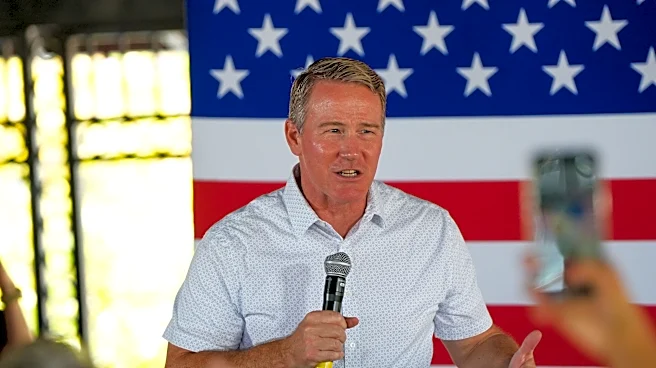
Sixth District Congressman Ben Cline is under scrutiny regarding his position on data center regulation, particularly concerning a proposed data center in Roanoke, Virginia. His Democratic opponent, Beth Macy, has criticized Cline for his perceived inconsistency
on the issue. Last year, Cline voted in the House for a measure that included a 10-year moratorium on state and local regulation of data centers, which ultimately failed in the Senate. Despite this, Macy states that Cline is now asserting that data centers are not a congressional responsibility. Macy, however, argues that Congress must intervene to establish national rules for data center construction, citing concerns about transparency, water protection, energy prices, renewable energy, and the containment of artificial intelligence. The proposed data center in Roanoke, near the intersection of I-81 and I-581, has become a focal point of this debate, with Macy advocating for a federal moratorium on new data centers until clear regulations are in place.
Why It's Important?
This debate highlights a significant policy conflict regarding the rapid expansion of data centers in the U.S. and the role of federal versus local governance in regulating them. The proliferation of data centers, driven by the growth of AI and other technologies, raises critical environmental and economic concerns, including water consumption, energy demands, and their impact on local communities. The differing stances of Congressman Cline and Beth Macy reflect broader disagreements within U.S. politics on how to balance technological advancement with environmental protection and local autonomy. The outcome of this debate could set precedents for future data center development across the nation, influencing energy policy, land use, and the regulatory landscape for tech companies. For residents, the implications include potential changes in utility costs, environmental quality, and the character of their communities.
What's Next?
The discussion around data center regulation is expected to intensify, especially with Beth Macy's call for Congress to get involved and establish national rules. This issue will likely remain a key point of contention in the upcoming congressional race for Virginia's Sixth District. Macy's campaign is advocating for a federal moratorium on new data centers until comprehensive regulations are developed, which could lead to legislative proposals at the national level. Local governments and communities will continue to grapple with the immediate impacts of proposed data center projects, such as the one in Roanoke, and may seek clearer guidance or intervention from federal authorities. The tech industry, particularly companies like Google and Meta, whose activities are linked to data center expansion, will likely monitor these developments closely as potential regulations could affect their operational strategies and growth.
Beyond the Headlines
The controversy surrounding data centers extends beyond immediate regulatory concerns, touching upon deeper ethical and societal implications. The rapid growth of AI, which heavily relies on these data centers, raises questions about the responsible development and deployment of advanced technologies. Macy's concern about 'containing AI before it controls us' points to a growing public anxiety about the unchecked power and influence of Big Tech. Furthermore, the practice of companies using LLCs to acquire land for data centers without direct attribution highlights issues of corporate transparency and accountability. The debate also underscores the tension between economic development, often promised by tech investments, and the preservation of local environmental quality and community interests. This situation reflects a broader national challenge in adapting existing regulatory frameworks to the demands of a rapidly evolving digital economy.