


What's Happening?
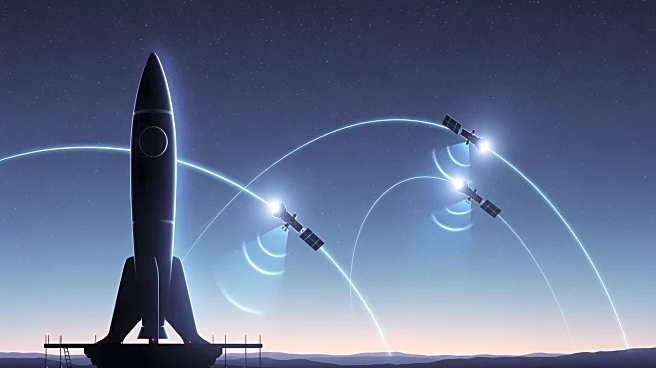
The Ariane 6 rocket, operated by Arianespace, successfully launched its first pair of Galileo navigation satellites from Europe's Spaceport in Kourou, French Guiana. The launch took place on December 17, 2025, at 12:01 a.m. EST. This mission, known as
Galileo Launch 14 (L14), aims to expand the Galileo satellite constellation, which serves as Europe's counterpart to the United States' Global Positioning System (GPS). The newly launched satellites will join 26 other active satellites in orbit. Following their deployment, the satellites will undergo a three-day process to unfold their solar arrays and conduct system checks. They will then enter a four-month drift and positioning phase before reaching their final operational orbit.
Why It's Important?
The successful launch of the Ariane 6 rocket marks a significant milestone for Europe's space capabilities, particularly in the realm of satellite navigation. By expanding the Galileo constellation, Europe enhances its autonomy in global navigation services, reducing reliance on external providers like the United States' GPS. This development is crucial for various sectors, including transportation, telecommunications, and defense, which depend on precise navigation and timing services. Additionally, the operational status of the Ariane 6 rocket strengthens Europe's position in the competitive heavy-lift launch market, offering an alternative to other global launch providers such as SpaceX.
What's Next?
The newly launched Galileo satellites will undergo a series of checks and adjustments over the next few months before becoming fully operational. As the Ariane 6 continues to prove its reliability, Europe is likely to increase its use of this rocket for future satellite launches, further solidifying its independence in space operations. The success of this mission may also lead to increased investment in the development of next-generation satellites and related technologies, enhancing Europe's competitiveness in the global space industry.