




What's Happening?
Democratic congressional candidate Dave Dawson, who is vying to replace current Fourth District Congressman Randy Feenstra of Hull, emphasizes that decisions regarding the placement of data centers should be made at the local level by the cities or counties
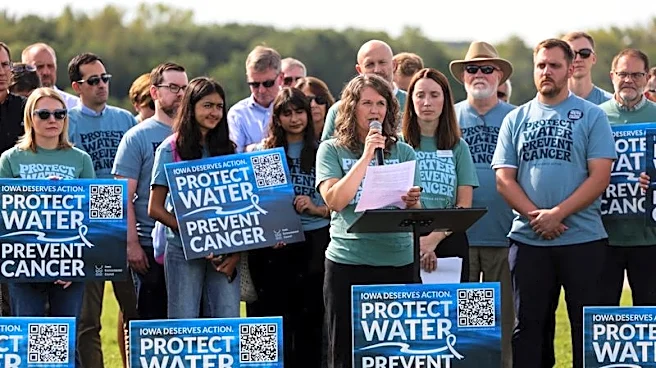
most directly affected. Dawson discussed this issue during a Democratic dinner in Sioux County. He believes that while local governments should have the primary say in business location decisions, the federal government has a crucial role in ensuring environmental standards are met. This includes overseeing water usage and other potential environmental impacts of such facilities. Dawson's comments were made in the context of potential data center development in Sioux County and the broader question of federal, state, or local regulatory authority. He is set to participate in a debate with his Republican opponent, Chris McGowan.
Why It's Important?
This stance is important as it highlights a key debate in economic development and environmental policy: the balance of power between local and federal authorities. For communities in Iowa's Fourth Congressional District, the development of data centers can bring significant economic opportunities, such as job creation and increased tax revenue, but also potential environmental concerns, including demands on local resources like water and energy. Dawson's position suggests a preference for community-led development, which could empower local residents and officials to shape their economic future while ensuring environmental protections are in place. This approach could influence how future large-scale industrial projects are approved and regulated across the U.S., particularly in rural areas grappling with balancing growth and sustainability. The outcome of this debate could set precedents for similar developments nationwide, affecting local autonomy and federal oversight in environmental matters.
What's Next?
Dave Dawson will participate in a debate with his Republican opponent, Chris McGowan, which will likely further elaborate on their respective positions regarding data center development and other key issues. The upcoming November election will determine who replaces Randy Feenstra as the Fourth District Congressman. The debate over local versus federal control in economic development and environmental regulation is expected to continue, especially as more communities consider large-scale industrial projects like data centers. Depending on the election results, the approach to these issues in Iowa's Fourth District could shift, potentially influencing future legislative efforts concerning local governance and environmental protection. Stakeholders, including local communities, environmental groups, and technology companies, will be closely watching the outcome and subsequent policy decisions.
Beyond the Headlines
The discussion around data center locations touches upon broader themes of technological expansion, rural development, and environmental stewardship. As the demand for data storage and processing grows, more communities, particularly those with available land and resources, may become targets for data center development. This raises questions about the long-term sustainability of such projects, the equitable distribution of their benefits and burdens, and the capacity of local governments to negotiate with large corporations. The emphasis on local decision-making, coupled with federal environmental oversight, could serve as a model for managing the impacts of rapid technological growth on local communities. It also underscores the ongoing tension between economic progress and environmental preservation, a challenge that many regions across the U.S. are currently facing.