


What's Happening?
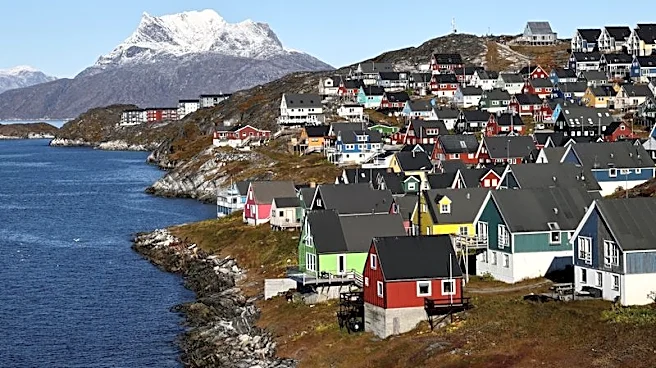
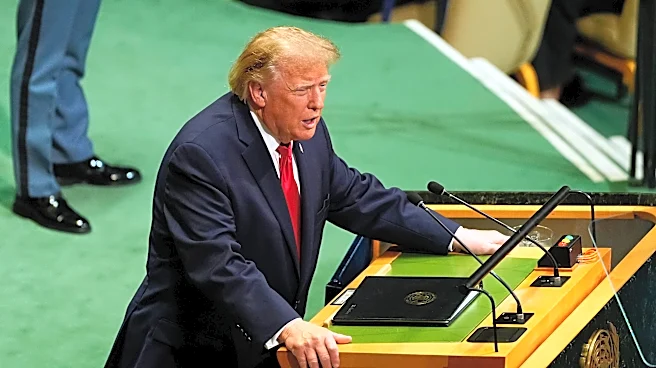
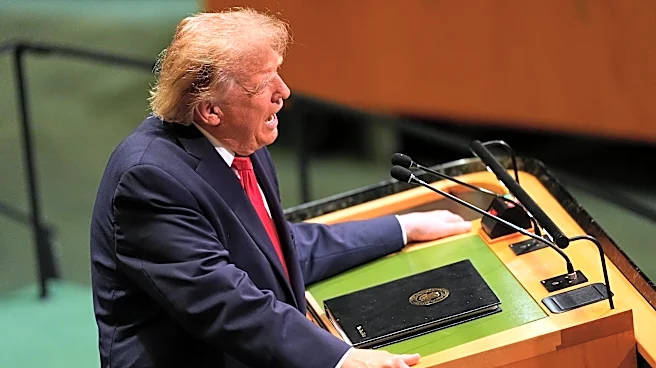
President Trump has announced a landmark agreement with Denmark and Greenland, granting the United States permanent control over security and other strategic needs in Greenland. This deal, which President Trump described as an 'Infinite Life' Agreement,
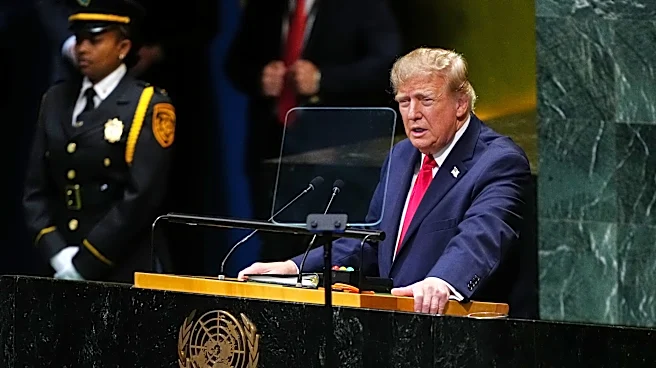
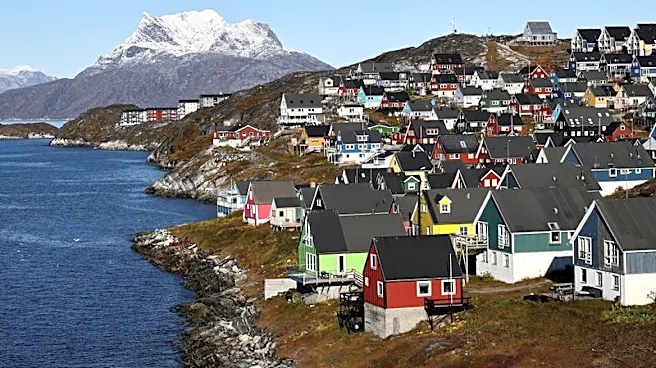
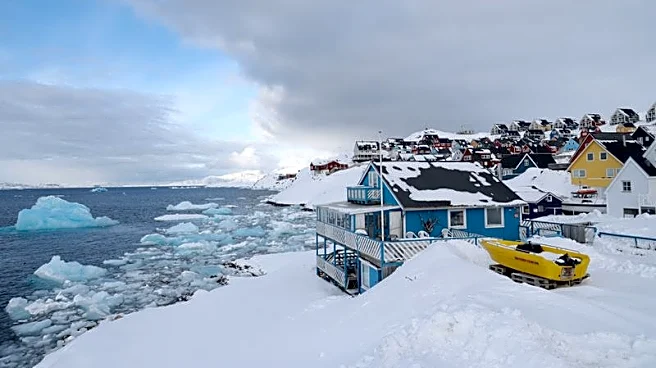
ensures the U.S. will have the complete ability to secure and defend Greenland and the United States without cost to the U.S. taxpayer. The agreement is set to be signed on the sidelines of the upcoming United Nations General Assembly meeting. President Trump stated that no adversary will be able to establish a military presence or make sensitive investments in Greenland without U.S. written approval. He also indicated that the U.S. would immediately begin developing a 'large Military presence' in an appropriate part of Greenland. This development follows President Trump's earlier aspirations for a controlling presence in Greenland, which initially met resistance from Danish Prime Minister Mette Frederiksen.
Why It's Important?
This agreement holds immense strategic importance for U.S. national security, particularly in the Arctic region. With China and Russia increasing their presence above the Arctic Circle, securing permanent control in Greenland strengthens the U.S. bulwark against potential adversaries. The deal enhances the U.S.'s ability to detect, identify, track, and destroy intercontinental ballistic missiles launched over the North Pole, which is critical for the effectiveness of the expansive U.S. air defense initiative, Golden Dome for America. It also shores up the Greenland-Iceland-UK gap and missile-warning corridors, while improving oversight of sea-borne traffic through Arctic sea lanes, thereby thwarting potential adventurism from Beijing and Moscow. Furthermore, the agreement provides the U.S. with access to critically needed rare earth minerals, reducing dependence on countries like China for these essential components used in technology, renewable energy, and military systems. This aligns with the 'America First' National Security Strategy, bolstering U.S. economic and military independence.
What's Next?
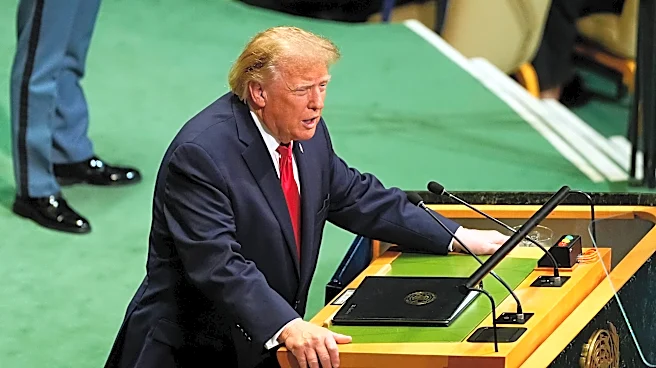
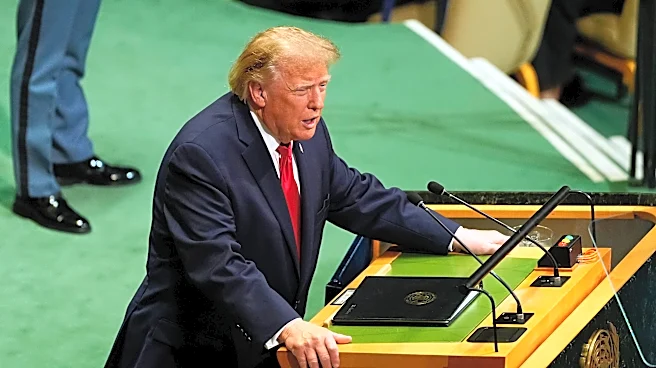
The agreement is scheduled to be formally signed on the sidelines of the upcoming United Nations General Assembly meeting in New York City. Following the signing, the U.S. is expected to commence the development of a significant military presence in Greenland, as indicated by President Trump. The specific details of the agreement, which have not yet been fully published, will likely be revealed after the signing. This will clarify the extent of U.S. control and the operational parameters for its military and economic activities on the island. The deal is also expected to facilitate increased U.S. corporate involvement in Greenland's mining sector, particularly for rare earth elements. Companies like Greenland Mines have already begun securing deals for projects such as the Sarfartoq Rare Earths Project, anticipating the benefits of unfettered U.S. access. The long-term implications will involve monitoring the reactions of other global powers, particularly Russia and China, to this enhanced U.S. strategic foothold in the Arctic.
Beyond the Headlines
Beyond its immediate strategic and economic benefits, this agreement signifies a profound shift in geopolitical dynamics in the Arctic. It underscores the increasing militarization and economic competition in a region previously viewed primarily through an environmental lens. The 'Infinite Life' nature of the agreement suggests a long-term commitment by the U.S. to maintain its dominance in the Arctic, potentially leading to a new era of great power competition in the high north. The deal also highlights the complex relationship between sovereignty and strategic interests, as Denmark and Greenland have agreed to U.S. control despite initial reservations. This could set a precedent for how smaller nations with strategically vital territories navigate relationships with larger global powers. The ethical implications of securing permanent control over another territory, even with consent, may also be debated, particularly concerning the balance between national security and the self-determination of indigenous populations in Greenland.