

What's Happening?
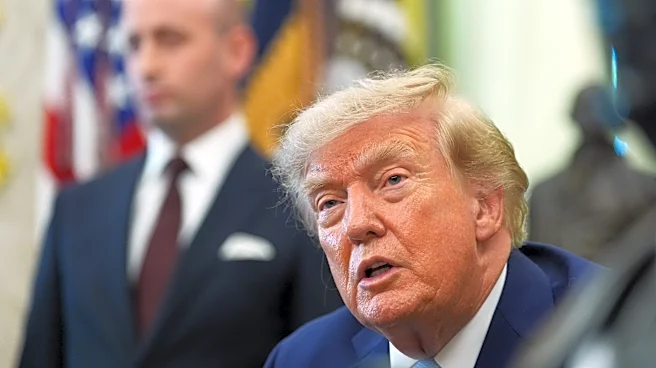
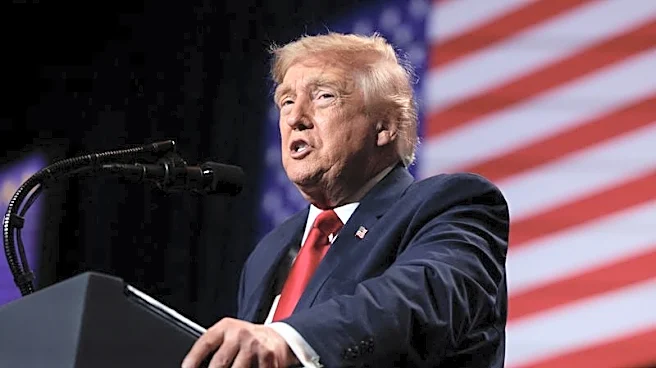
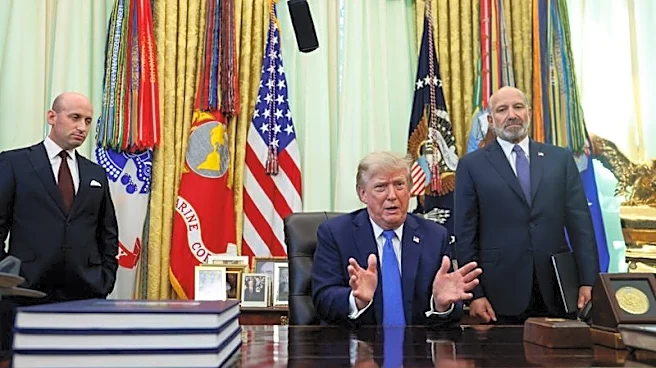
President Donald Trump has signed two new executive orders aimed at restricting birthright citizenship in the United States. This move comes just two months after the Supreme Court ruled against his previous attempt to alter the constitutional provision
that grants automatic citizenship to individuals born on U.S. soil. The new orders target children of members of foreign terrorist organizations and those involved in 'birth tourism,' where individuals travel to the U.S. to give birth and secure citizenship for their children. Trump's advisor, Stephen Miller, emphasized that these orders are designed to prevent misuse of birthright citizenship. Despite the Supreme Court's earlier decision, the White House argues that these new orders do not violate the court's ruling. However, they are expected to face legal challenges.
Why It's Important?
The executive orders signed by President Trump could have significant implications for U.S. immigration policy and the interpretation of the 14th Amendment. By targeting specific groups, the orders aim to address concerns about national security and immigration fraud. However, they also raise questions about the balance between executive power and constitutional rights. If upheld, these orders could set a precedent for further restrictions on birthright citizenship, potentially affecting thousands of individuals and families. The legal challenges anticipated could lead to a prolonged judicial review, impacting the broader debate on immigration reform in the U.S.
What's Next?
The new executive orders are likely to be challenged in court, as opponents argue they contradict the Supreme Court's previous ruling and the 14th Amendment. Legal battles could delay the implementation of these orders, and the outcome may influence future immigration policies. Stakeholders, including immigrant advocacy groups and legal experts, are expected to mobilize against the orders, while supporters may push for legislative backing. The ongoing legal discourse will be crucial in determining the future of birthright citizenship in the U.S.