





What's Happening?
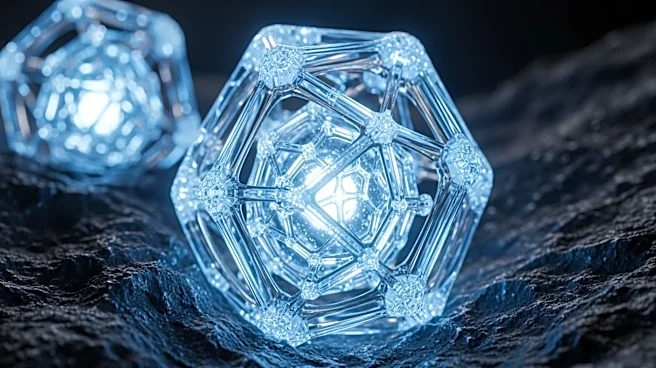
Scientists have identified a new clathrate crystal within trinitite, a material formed during the first nuclear bomb test, the Trinity test, in 1945. This crystal, a cagelike chemical lattice, was found in a copper-rich droplet within the trinitite. The
discovery was made possible by the extreme conditions of the nuclear explosion, which exposed sand to high temperatures and pressures, leading to the formation of unique materials. The clathrate's structure, composed of silicon atoms with calcium, copper, and iron atoms trapped inside, represents a novel addition to the clathrate universe.
Why It's Important?
The discovery of this clathrate crystal provides new insights into the types of materials that can form under extreme conditions, such as those present during nuclear detonations. This finding contributes to the field of materials science and offers potential new forensic tools for investigating nuclear test sites. Understanding these unique materials can lead to advancements in technology and inform future research on high-energy events, such as nuclear explosions and hypervelocity impacts.
Beyond the Headlines
The research highlights the role of rare, high-energy events as natural laboratories for producing unexpected crystalline matter. It underscores the potential for such events to test and constrain structural models beyond conventional synthesis. This work could pave the way for new materials with unique properties, potentially leading to innovations in various fields, including technology and defense.