
What's Happening?
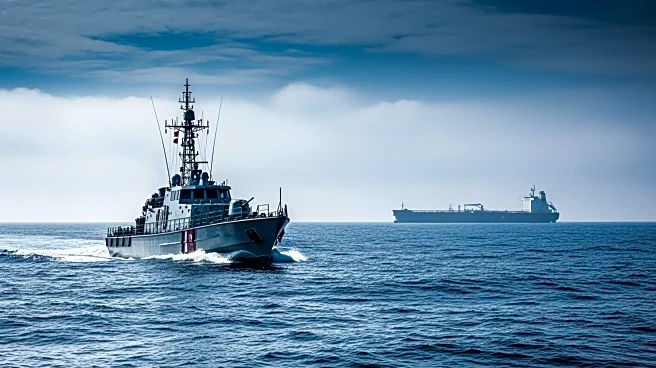
U.S. naval forces are actively pursuing a tanker named Bella 1, which is linked to Venezuela, in Caribbean waters. The vessel has been evading U.S. authorities, refusing to allow Coast Guard crews to board.
This pursuit is part of a broader effort to enforce sanctions against Venezuela, which has been redirecting its oil exports away from the U.S. and towards countries like China and Malaysia. The U.S. Energy Information Administration has reported a significant decrease in Venezuelan oil exports to the U.S., while exports to China have nearly doubled. Analysts suggest that even if Bella 1 is intercepted, other vessels may continue to reroute, maintaining revenue streams for the Venezuelan government.
Why It's Important?
The pursuit of Bella 1 highlights ongoing tensions between the U.S. and Venezuela, particularly regarding oil exports and sanctions enforcement. The redirection of Venezuelan oil exports away from the U.S. could have significant implications for global oil markets and U.S. energy security. The situation underscores the challenges the U.S. faces in enforcing sanctions and curbing revenue streams to the Venezuelan government, which is under scrutiny for its political and economic policies. The outcome of this pursuit could influence future U.S. strategies in dealing with sanctioned nations and their trade partners.
What's Next?
If U.S. forces succeed in intercepting Bella 1, it could lead to further diplomatic tensions between the U.S. and Venezuela, as well as with countries receiving Venezuelan oil. The U.S. may increase its naval presence in the region to deter similar activities. Additionally, there could be legal and diplomatic repercussions if the vessel is seized, potentially involving international maritime law and trade agreements. The situation may prompt Venezuela to seek alternative routes or methods to continue its oil exports, potentially involving more complex shipping arrangements.