



What's Happening?
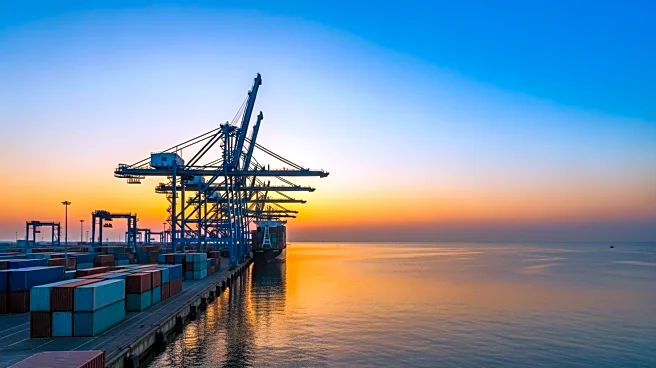
The expansion of Berbera Port in Somaliland is yielding significant economic, trade, and environmental benefits, according to a new evaluation. The project, led by DP World in partnership with the Government of Somaliland and supported by British International
Investment, has transformed Berbera into a key regional logistics hub. The port's container handling capacity has more than tripled, from 150,000 to 500,000 twenty-foot equivalent units (TEUs), thanks to new quay infrastructure and modern cargo-handling equipment. This has allowed the port to accommodate larger vessels and increased traffic, reducing average vessel turnaround times from 64 hours in 2018 to 25 hours in 2024. The improvements have positioned Berbera as a competitive regional port, increasing its share of regional container trade from 9% in 2017 to 14% in 2024.
Why It's Important?
The expansion of Berbera Port is crucial for Somaliland's economic development and regional trade dynamics. By enhancing operational efficiency and capacity, the port reduces costs for shipping lines and cargo owners, offering a cost-competitive alternative to established regional ports. This is particularly significant for landlocked Ethiopia, providing access to previously underserved areas. The port's development has also contributed to job creation and economic output, supporting around 2,490 jobs and adding $45.1 million to Somaliland's economy in 2024. Additionally, the environmental benefits, such as reduced carbon emissions due to improved logistics, highlight the broader impact of the port's modernization.
What's Next?
While the current trade volumes do not yet require the port's full capacity, the potential for future growth remains significant. The ongoing Red Sea crisis and other external factors have affected shipping patterns, but as these stabilize, Berbera's role as a regional trade hub is expected to strengthen further. The full impact of the investment, including potential benefits for living standards and economic spillovers into Ethiopia, is yet to be fully realized. Continued investment in infrastructure and logistics ecosystems will be key to unlocking these gains.