
What's Happening?
Cat Fong, a researcher from the University of California Santa Barbara, has identified that having six evacuation routes is crucial for community safety during wildfires. This conclusion comes from analyzing
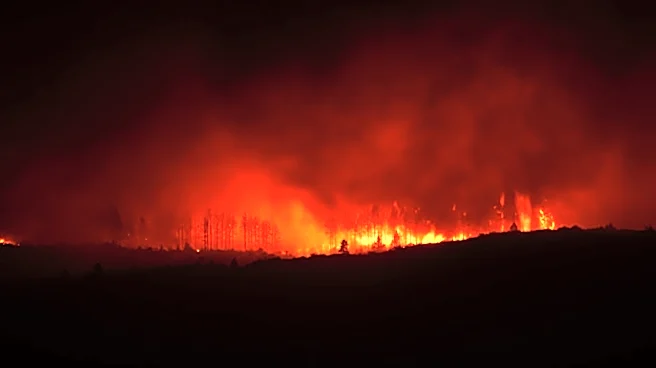
wildfire fatalities in the U.S. over the past two decades. Fong's research, part of the Wildfire Resilience Index, shows that communities with six or fewer major roads face exponentially higher per capita fatality rates during wildfires. The study highlights the importance of having multiple exits to prevent congestion and ensure safe evacuations, as seen in the Camp Fire incident in Paradise, California.
Why It's Important?
The findings underscore the need for urban planning and policy adjustments to enhance community resilience against wildfires. With climate change increasing the frequency and intensity of wildfires, ensuring adequate evacuation routes can save lives. Communities with limited exits are at higher risk, making this research vital for local governments and planners. The Wildfire Resilience Index provides a tool for assessing and improving evacuation infrastructure, potentially influencing future legislation and funding for road development in vulnerable areas.
What's Next?
Local governments and city planners may use the Wildfire Resilience Index to evaluate their communities' evacuation readiness. This could lead to infrastructure investments and policy changes to increase the number of evacuation routes in high-risk areas. Additionally, the research may prompt state and federal agencies to prioritize funding for road expansions and improvements in wildfire-prone regions, aiming to reduce future fatalities.