




What's Happening?
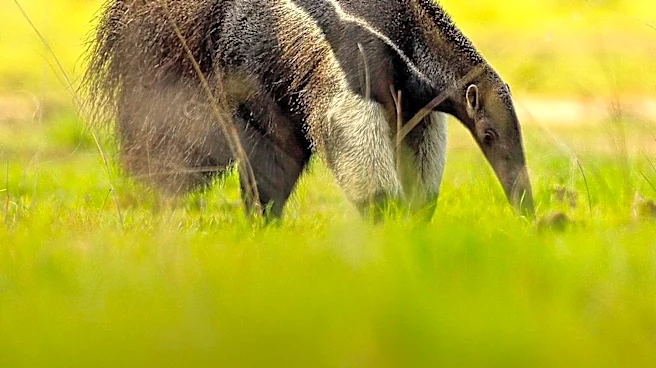
A 25-year camera-trap study, the longest ever conducted on giant anteaters, has revealed that these elusive mammals are changing their behavior in response to increasing temperatures. Researchers conducted 34 camera-trap surveys across 23 sites in northern
Bolivia, encompassing tropical forests, savannas, and montane forests. The findings, published in the journal Xenarthra, indicate that giant anteaters are more commonly found in tropical savannas with forest patches rather than in areas dominated by Amazonian rainforest. Crucially, the study observed that in savannas, anteaters are becoming increasingly active during the night when temperatures drop, a shift from their primarily diurnal activity in cooler tropical rainforests. This behavioral adaptation suggests a response to thermal stress, with forest patches providing important thermal refuges.
Why It's Important?
This study provides critical insights into how climate change and habitat loss may affect vulnerable species. Giant anteaters are currently listed as Vulnerable by the IUCN, facing threats from habitat loss, fragmentation, hunting, road mortality, attacks by domestic and feral dogs, and wildfires. The observed behavioral changes highlight the immediate impact of environmental conditions on wildlife and underscore the importance of conserving diverse habitats, including both forests and natural savannas. Understanding these adaptations is vital for developing effective conservation strategies, as it demonstrates the need to protect not only large forest areas but also smaller, fragmented forest patches that serve as crucial refuges for species adapting to a changing climate. The long-term monitoring approach used in this study offers a model for assessing the resilience and vulnerability of other species to environmental shifts.
What's Next?
The research team suggests that continued long-term wildlife monitoring and camera-trap surveys will be essential to further understand how giant anteaters and other species respond to ongoing environmental changes. The findings will inform conservation efforts, emphasizing the need for integrated strategies that protect both extensive rainforests and smaller, fragmented forest patches within savanna ecosystems. Conservation organizations and local governments may need to prioritize the preservation of these thermal refuges and implement measures to mitigate other threats such as habitat fragmentation and human-wildlife conflict. Future research could also focus on the physiological impacts of these behavioral shifts and the long-term viability of such adaptations in the face of accelerating climate change.
Beyond the Headlines
The study's findings extend beyond the immediate conservation of giant anteaters, offering a broader perspective on the ecological consequences of climate change. The shift to nocturnal activity in response to heat stress could have cascading effects on ecosystem dynamics, altering predator-prey relationships, competitive interactions, and seed dispersal patterns. This highlights the subtle yet profound ways in which climate change can reshape entire ecological communities. Furthermore, the study underscores the value of long-term ecological research and the use of technologies like camera traps in revealing complex behavioral adaptations that might otherwise go unnoticed. It also brings to light the ethical considerations of human impact on natural habitats and the responsibility to protect biodiversity in the face of global environmental challenges.