


What's Happening?
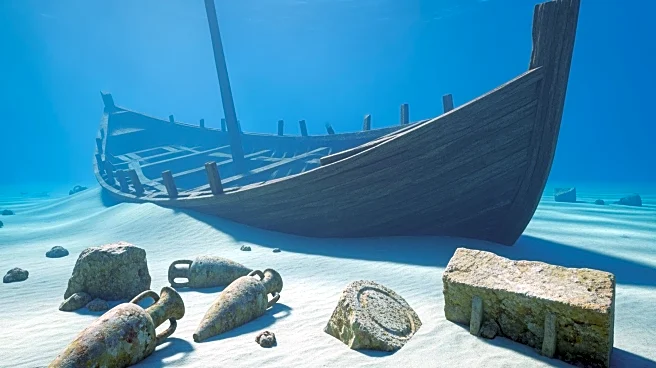
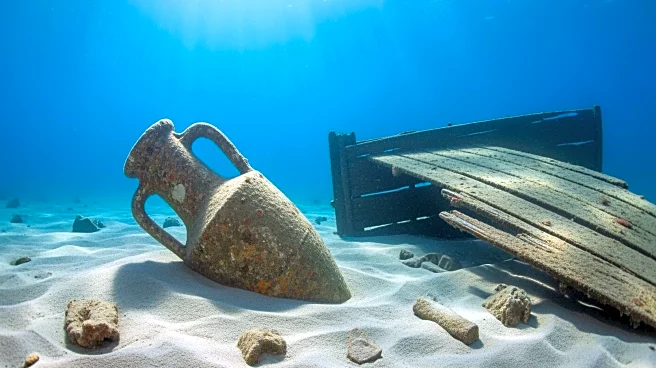
Italian authorities, during a routine patrol in the Ionian Sea, discovered a late Roman merchant shipwreck still carrying its cargo of amphorae. The Guardia di Finanza, Italy's financial police force, found the ship off the coast of Apulia, known as the 'heel'
of Italy, in June 2025. The discovery was kept confidential until now to prevent looting and preserve the archaeological information. The ship, dating from the late Imperial era (284 A.D. to 641 A.D.), was equipped to transport garum, a fermented fish sauce popular in ancient Rome. The location of the ship remains undisclosed to protect the site, and the area is under constant monitoring by the Naval Operations Section of the Guardia di Finanza in Gallipoli. The authorities are currently surveying and documenting the wreck using advanced investigative methodologies.
Why It's Important?
The discovery of the Roman shipwreck is significant as it provides valuable insights into ancient maritime trade and the economic history of the Mediterranean region. The preservation of the amphorae and their contents offers a rare glimpse into the commodities that were traded during the late Imperial era. This find contributes to the broader understanding of Roman commerce and daily life, particularly the widespread use of garum. The confidentiality maintained by the Italian authorities underscores the importance of protecting archaeological sites from looting, ensuring that historical artifacts can be studied and preserved for future generations. Such discoveries enhance cultural heritage and can boost interest in historical research and tourism in the region.
What's Next?
Italian officials will continue to survey and document the shipwreck, employing advanced methodologies to gather as much information as possible. The ongoing monitoring of the site by the Guardia di Finanza aims to prevent unauthorized access and potential looting. As the study progresses, findings from the shipwreck could be shared with the academic community, potentially leading to new research and publications on Roman maritime history. The preservation efforts may also involve collaboration with international archaeological organizations to ensure the site's protection and the dissemination of knowledge gained from the discovery.
Beyond the Headlines
The discovery of the shipwreck highlights the ethical considerations in archaeology, particularly the balance between public interest and the need to protect historical sites. The decision to keep the location confidential reflects a growing awareness of the threats posed by looting and the illicit trade of artifacts. This case also illustrates the role of modern technology in uncovering and preserving historical sites, as advanced equipment was crucial in detecting the anomaly on the seabed. The find may inspire further exploration of the Mediterranean seabed, potentially leading to more discoveries that could reshape our understanding of ancient civilizations.