





What's Happening?
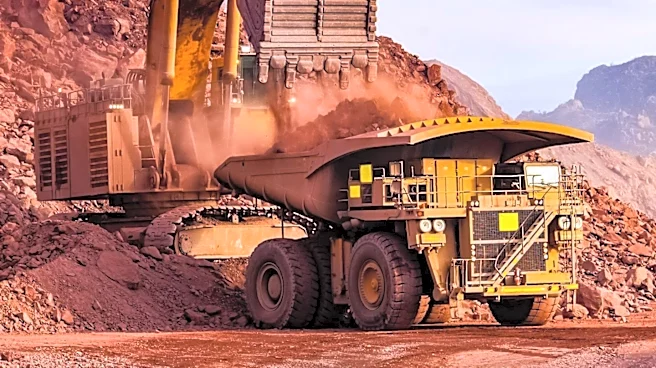
Europe is emphasizing responsible mining practices as a critical component of its green transition strategy. The electrification of transport, expansion of renewable energy, and digitalization are driving a rapid increase in demand for essential minerals
such as lithium, copper, nickel, cobalt, and rare earth elements. International assessments project that demand for some critical minerals could multiply several times over by 2040. While recycling and urban mining are part of the solution, they alone cannot meet the escalating demand, necessitating new material extraction. The focus is on ensuring that mining and mineral processing are conducted sustainably and equitably, minimizing environmental impact, and maximizing benefits for society and local communities. This involves careful planning, advanced technology, and robust governance frameworks to balance global climate targets with local environmental and societal interests.
Why It's Important?
The European Union's commitment to responsible mining is crucial for achieving its climate targets and securing its economic future. Without a reliable and ethically sourced supply of critical minerals, the transition to a green economy—powered by electric vehicles, wind turbines, and advanced digital infrastructure—would be severely hampered. This initiative aims to reduce Europe's dependence on imported raw materials, thereby strengthening its security of supply and strategic autonomy. By promoting sustainable practices, Europe seeks to set a global standard for mining, encouraging other nations to adopt similar approaches. This also addresses potential social and environmental concerns associated with mining, ensuring that the pursuit of climate goals does not come at the expense of local communities or ecosystems. The success of this approach could influence global mining standards and supply chain ethics.
What's Next?
Europe will continue to invest in research and development for sustainable mining technologies, including advanced extraction and processing methods that reduce environmental footprints. There will be an increased focus on international cooperation, with Europe sharing its expertise in responsible mining with countries rich in mineral resources. This collaboration aims to foster sustainable development globally and strengthen Europe's long-term competitiveness. Domestically, Sweden, with its favorable geological conditions and strong environmental ambitions, is expected to play a significant role in developing and demonstrating responsible mining practices. The ongoing challenge will be to maintain public confidence through transparent processes, early stakeholder dialogue, and rigorous environmental assessments, ensuring that new extraction projects are designed with consideration for all affected interests.
Beyond the Headlines
The emphasis on responsible mining in Europe extends beyond mere resource acquisition; it represents a fundamental shift towards integrating ethical and environmental considerations into industrial policy. This approach acknowledges that the 'green transition' must be holistic, encompassing not only the end-use of renewable technologies but also the entire supply chain, from extraction to disposal. It highlights the complex balancing act between urgent climate goals and the imperative to protect local environments and communities. This could lead to the development of new certification standards for minerals, increased corporate accountability, and a greater focus on circular economy principles within the mining sector. Ultimately, it challenges the traditional paradigm of resource exploitation, advocating for a model where economic development, environmental stewardship, and social equity are mutually reinforcing.