
What's Happening?
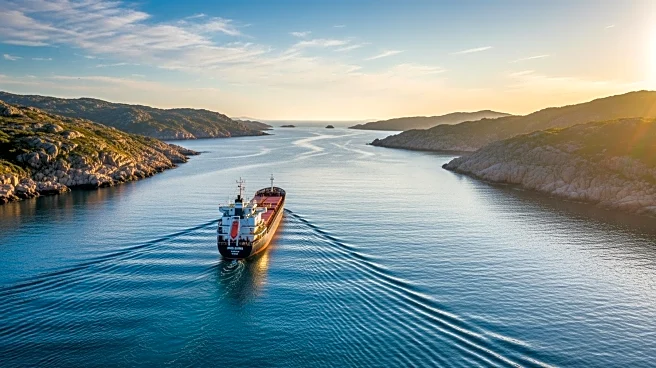
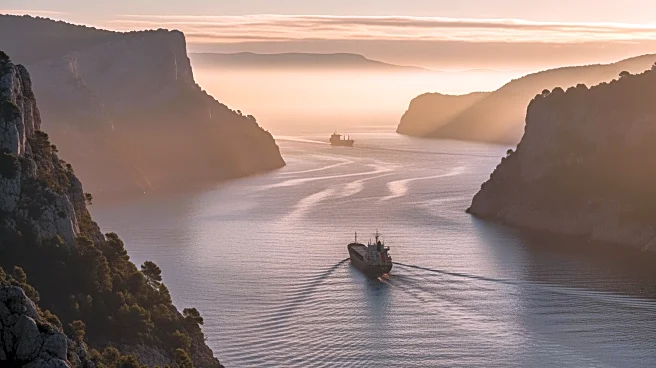
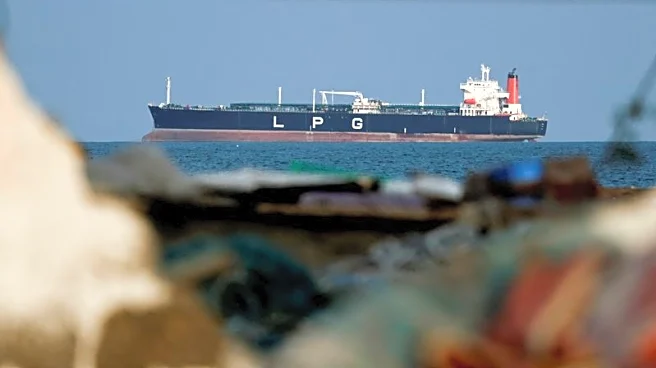
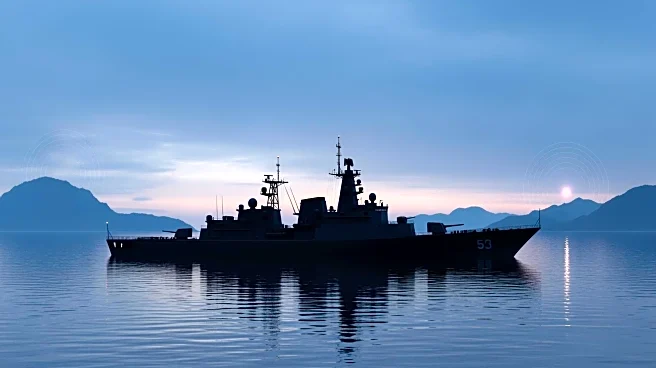
President Trump has called on U.S. allies to send warships to protect merchant vessels passing through the Strait of Hormuz, a critical shipping lane threatened by Iranian retaliation. Despite the strategic importance of the strait, most longtime allies,
including France, Germany, and the U.K., have declined to join the U.S.-led effort, citing concerns about being drawn into a wider conflict. The lack of support reflects Washington's growing isolation in its efforts to stabilize the region amid its ongoing conflict with Iran.
Why It's Important?
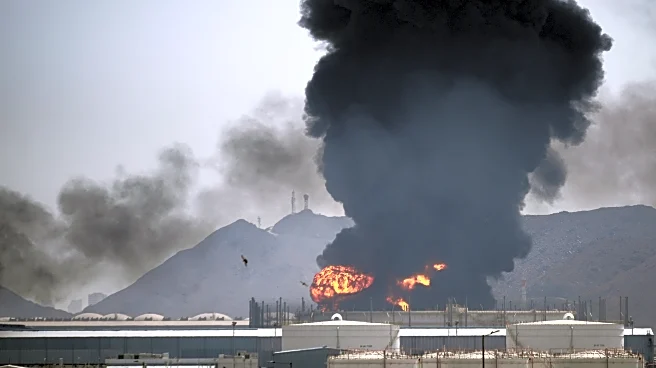
The refusal of key allies to support the U.S. in securing the Strait of Hormuz highlights the limits of President Trump's influence on the international stage. The situation underscores the challenges of maintaining global alliances and the potential economic impact of disrupted oil supplies, which have already led to a significant increase in global oil prices. The diplomatic friction also raises questions about the future of U.S. foreign policy and its ability to lead international coalitions in addressing global security threats.
What's Next?
President Trump has indicated that the U.S. may proceed with its plans to secure the strait without allied support, potentially increasing the risk of direct confrontation with Iran. The administration's approach to the conflict and its impact on global energy markets will likely continue to be a focus of international attention. The situation also raises questions about the future of U.S. alliances and the potential for further geopolitical instability in the region.