
What's Happening?
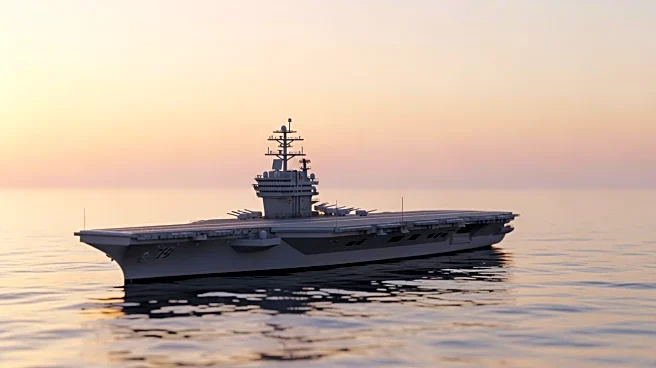
The USS John F. Kennedy, the U.S. Navy's second Ford-class aircraft carrier, has embarked on builder's trials after a decade of construction. These trials are crucial for testing the ship's systems and
components at sea before Navy acceptance. The construction of the Kennedy faced significant delays and cost overruns, similar to its predecessor, the USS Gerald R. Ford. Originally scheduled for delivery in 2020, the Kennedy's completion was postponed to accommodate modifications for the F-35 strike fighter. The carrier is now expected to be delivered in early 2027, 18 years after the initial contract award.
Why It's Important?
The successful completion of the USS John F. Kennedy is vital for the U.S. Navy's operational capabilities, as it will enhance the fleet's power projection and support for global missions. The delays and cost overruns in the Ford-class program highlight the challenges of modern naval shipbuilding, impacting budget allocations and timelines. The integration of the F-35 strike fighter into the Kennedy underscores the importance of adapting to evolving military technologies. The trials mark a significant milestone in the carrier's journey towards operational readiness, with implications for future naval strategies and defense planning.
What's Next?
Following the builder's trials, the USS John F. Kennedy will undergo further evaluations and modifications as needed before its official delivery to the Navy. The completion of the Kennedy will be closely monitored by defense stakeholders, as it may influence future procurement and development of naval assets. The Navy will continue to focus on integrating advanced technologies into its fleet, ensuring readiness for future challenges. The lessons learned from the Ford-class program may inform improvements in future shipbuilding projects, potentially leading to more efficient processes and cost management.