
What's Happening?
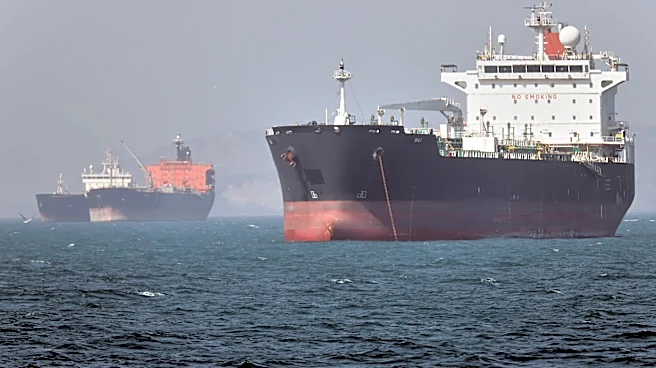
Saudi Aramco CEO Amin Nasser has issued a warning regarding the ongoing disruption in the Strait of Hormuz, stating that it could delay the normalization of the oil market until 2027. The disruption is a result
of Iranian authorities blocking the waterway in response to U.S. and Israeli attacks on Iran, which began on February 28. This blockade has significantly reduced the number of vessels crossing the strait, from 70 per day to just 2 to 5, causing a loss of around 100 million barrels of oil weekly. Aramco has increased the capacity of its East-West Pipeline to 7 million barrels per day to divert oil to the Red Sea Port of Yanbu. Despite these efforts, Nasser emphasized that even if the strait were to reopen immediately, it would still take months for the market to stabilize.
Why It's Important?
The disruption in the Strait of Hormuz is a critical issue for global oil markets, as it is a major chokepoint for oil transportation. The prolonged closure has led to soaring energy prices and heightened fears of inflation and economic downturns. The situation underscores the vulnerability of global energy supply chains to geopolitical tensions. The delay in market recovery could have significant economic implications, affecting industries reliant on stable oil prices and potentially leading to increased costs for consumers and businesses worldwide.
What's Next?
If the disruption continues, it could lead to further economic instability and pressure on oil-dependent economies. Stakeholders, including governments and energy companies, may need to explore alternative routes and strategies to mitigate the impact. The situation also highlights the need for diplomatic efforts to resolve the underlying geopolitical tensions and ensure the security of critical maritime routes.