





What's Happening?
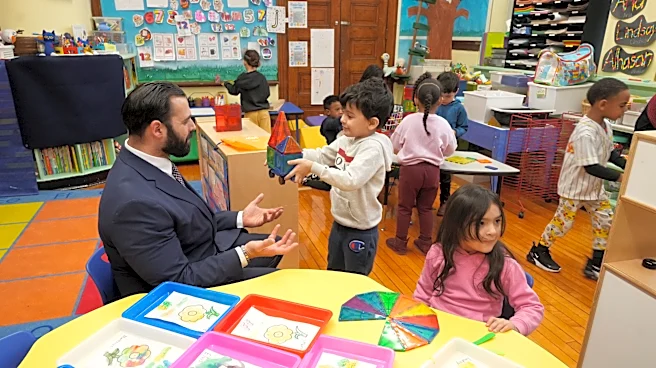
New York State has launched a significant expansion of free pre-kindergarten access, with Governor Hochul announcing plans for every district in the state to offer universal pre-kindergarten by the fall of 2028. This initiative aims to provide widespread
early childhood education opportunities for families across New York. The expansion builds upon existing pre-K programs and seeks to ensure that all eligible children have access to foundational learning experiences before entering kindergarten. Melissa Colorado of NBC New York provided details on what this expansion means for families, emphasizing the state's commitment to investing in early education. The program's phased implementation over the next few years will involve collaboration between state education authorities and local school districts to establish and expand pre-K facilities and staffing.
Why It's Important?
This major expansion of free pre-kindergarten access in New York State holds significant importance for several reasons. Firstly, it addresses educational equity by providing all children, regardless of their socioeconomic background, with access to high-quality early learning experiences. Research consistently shows that early childhood education has a profound impact on a child's cognitive and social development, leading to better academic outcomes and long-term success. Secondly, the initiative offers substantial economic benefits to families by reducing the financial burden of childcare, allowing more parents to participate in the workforce or pursue educational opportunities. This can stimulate local economies and improve household stability. Thirdly, by investing in universal pre-K, New York aims to strengthen its future workforce and foster a more educated populace, which can lead to increased innovation and productivity across various sectors.
What's Next?
Over the next few years, New York State will focus on the phased implementation of universal pre-kindergarten across all districts, with a target completion date of fall 2028. This will involve significant planning and resource allocation, including the development of new pre-K facilities, recruitment and training of qualified educators, and the establishment of curriculum standards. Local school districts will play a crucial role in integrating these programs into their existing educational infrastructure. State education officials will likely monitor the progress of implementation, providing support and guidance to districts as they expand their pre-K offerings. Families can expect to see a gradual increase in available pre-K slots and programs in their communities, with information on enrollment procedures becoming more widely disseminated as the initiative progresses.
Beyond the Headlines
The expansion of universal pre-kindergarten in New York State has deeper implications beyond immediate educational and economic benefits. It represents a societal shift towards recognizing early childhood education as a fundamental right and a critical investment in human capital. This policy could serve as a model for other states considering similar initiatives, potentially influencing national education policy discussions. Furthermore, the long-term impact could include a reduction in achievement gaps, improved public health outcomes due to early intervention, and a more engaged citizenry. However, challenges such as securing adequate funding, ensuring consistent program quality across diverse districts, and addressing potential staffing shortages will need continuous attention. The success of this initiative will ultimately depend on sustained political will and effective collaboration among various stakeholders.