




What's Happening?
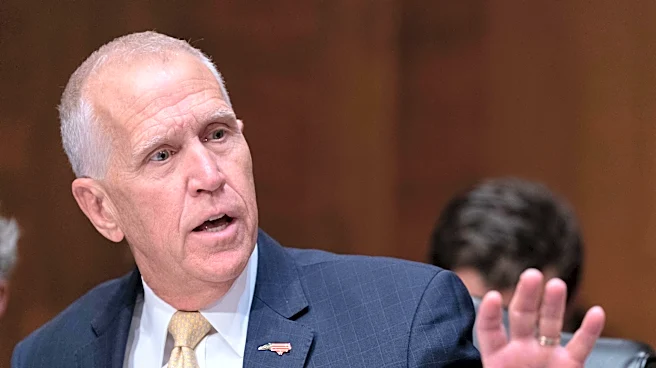
Senator Thom Tillis of North Carolina has announced he is dropping his opposition to President Trump's nomination of Kevin Warsh as the new Federal Reserve Chair. This decision comes after the Department of Justice concluded its investigation into the current
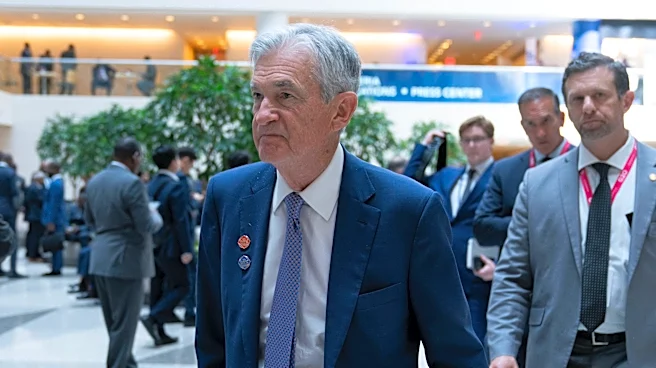
Fed Chair, Jerome Powell, regarding the multibillion-dollar building renovations at the Federal Reserve. Tillis had previously blocked Warsh's confirmation in the Senate Banking Committee, citing concerns over the investigation. With the DOJ's decision, Tillis expressed readiness to move forward with Warsh's confirmation, stating his belief in Warsh's potential as a great Fed Chair. The investigation had scrutinized a project initially estimated at $1.9 billion, now at $2.5 billion, which had been criticized by President Trump for cost overruns.
Why It's Important?
The removal of Senator Tillis's opposition is a significant development in President Trump's efforts to appoint Kevin Warsh as the Federal Reserve Chair, replacing Jerome Powell. This move could potentially shift the Federal Reserve's approach to interest rates, aligning more closely with Trump's preference for lower rates. The conclusion of the DOJ investigation removes a major hurdle, allowing the Senate Banking Committee to proceed with Warsh's nomination. This decision could impact U.S. monetary policy and economic stability, as the Federal Reserve plays a crucial role in managing inflation and employment through its control of interest rates. The outcome of Warsh's confirmation could influence financial markets and the broader economy.
What's Next?
The Senate Banking Committee is scheduled to vote on Warsh's nomination soon. If confirmed, Warsh will face the challenge of maintaining the Federal Reserve's independence while potentially navigating pressure from the White House to adjust interest rates. Additionally, Jerome Powell's future role remains uncertain, as he could choose to remain on the Fed's board of governors after his term as Chair ends. This decision could affect the composition and decision-making dynamics of the Federal Reserve's board. Stakeholders, including financial markets and policymakers, will be closely monitoring these developments.