








What's Happening?
China is recalibrating its renewable energy strategy in response to geopolitical tensions, particularly the Iran war's impact on the Strait of Hormuz. Historically, China's green energy initiatives were driven by economic transformation and environmental
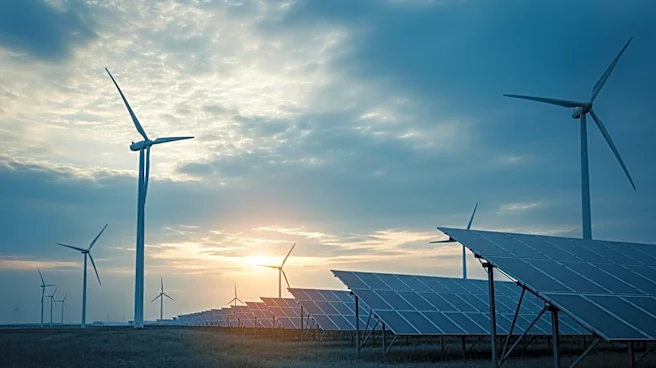
goals. However, the recent geopolitical climate has highlighted the strategic necessity of energy resilience. The closure of the Strait of Hormuz by Iran has underscored the vulnerability of relying on imported hydrocarbons, prompting China to enhance its energy security measures. This includes building large oil reserves, expanding storage capacity, and advancing electrification through renewable sources like solar and wind. Despite these efforts, China's solar industry faces challenges such as overcapacity and low margins, complicating the strategic push towards renewables.
Why It's Important?
The shift in China's energy strategy has significant implications for global energy security and geopolitical dynamics. By reducing dependency on imported hydrocarbons, China aims to mitigate risks associated with geopolitical conflicts and chokepoints like the Strait of Hormuz. This move could influence other countries, such as India, Japan, and South Korea, to reassess their energy strategies. The emphasis on renewables as part of national resilience highlights the growing importance of energy security in geopolitical considerations. However, the challenges faced by China's solar industry indicate that achieving energy security through renewables is complex and requires comprehensive system integration, including storage and grid flexibility.
What's Next?
China's continued focus on renewable energy as a strategic necessity suggests that other nations may follow suit, especially those vulnerable to similar geopolitical risks. The need for a resilient energy system that can withstand geopolitical stress will likely drive further innovation and investment in renewable technologies and infrastructure. Countries may also seek to diversify their energy sources and enhance strategic reserves to reduce reliance on vulnerable supply chains. The evolving geopolitical landscape will necessitate ongoing adjustments in energy policies and strategies globally.
Beyond the Headlines
The broader implications of China's energy strategy shift extend beyond immediate geopolitical concerns. The integration of renewables into national energy systems represents a significant shift in how countries approach energy security. This transition may lead to long-term changes in global energy markets, with increased competition and collaboration in renewable technologies. Additionally, the focus on energy resilience could drive policy changes that prioritize sustainability and environmental considerations alongside economic and strategic goals.