




What's Happening?
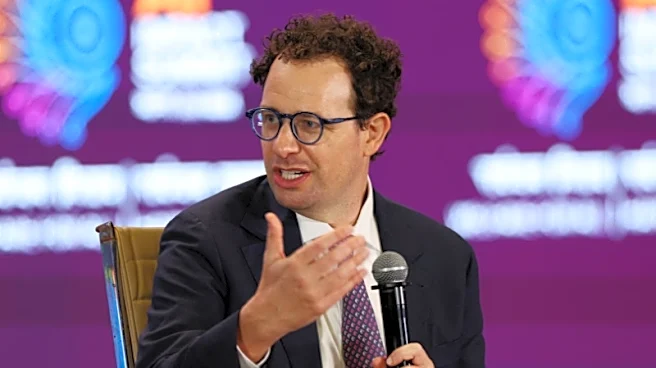
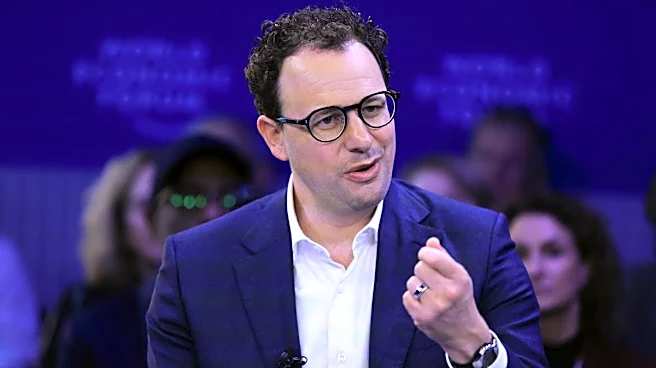
Reddit co-founder Alexis Ohanian has stated that the technology industry has been 'tone deaf' in its communication regarding the risks associated with Artificial Intelligence (AI). Speaking to CNBC, Ohanian emphasized the need for a public discourse focused
on substantive risks rather than issues that can be politicized. He acknowledged that the tech industry has contributed to this problem by failing to adequately explain AI to the public. Ohanian believes that while AI risks are real, they are often more 'benign' or 'banal' than the apocalyptic 'Terminator and Skynet' scenarios frequently portrayed. He highlighted that such exaggerated warnings can divert attention from more practical concerns, such as 'agent swarms,' where multiple AI agents collaborate on complex tasks. His comments follow recent warnings from researchers at prominent AI labs like OpenAI and Anthropic about the rapid advancement of recursive self-improvement (RSI), a process where AI systems develop more advanced models, potentially leading to a loss of human control over their evolution.
Why It's Important?
Ohanian's critique is significant because it comes from a prominent figure within the tech industry, highlighting an internal recognition of a communication failure. The public's understanding of AI's potential benefits and risks is crucial for informed policy-making and societal adaptation. Misinformation or a lack of clear explanation from the industry can lead to either undue fear or complacency, both of which can hinder responsible development and regulation. If the public and policymakers are focused on fictional 'Skynet' scenarios, they might overlook more immediate and tangible risks, such as the ethical implications of AI in decision-making, job displacement, or the potential for misuse in areas like surveillance or autonomous weapons. An informed public is essential for fostering trust and ensuring that AI development aligns with societal values and safety. The comparison of AI to nuclear energy underscores the dual nature of powerful technologies—immense potential for good alongside significant risks if not managed responsibly.
What's Next?
The call for 'fewer tweets and more thoughtful conversation' suggests a potential shift in how tech leaders engage with the public and policymakers on AI. This could lead to increased efforts from tech companies to demystify AI, explain its functionalities, and transparently discuss its real-world implications. We might see more educational initiatives, public forums, and clearer communication strategies from AI developers and industry bodies. The ongoing debate around AI regulation is likely to intensify, with a greater emphasis on understanding and mitigating practical risks rather than speculative ones. Stakeholders, including government bodies, civil society groups, and the tech industry, will need to collaborate to establish frameworks that balance innovation with safety and ethical considerations. The focus on 'agent swarms' as a more realistic concern indicates a move towards addressing specific, actionable challenges in AI development and deployment.
Beyond the Headlines
Ohanian's remarks touch upon a deeper issue of public trust and the tech industry's responsibility in shaping narratives around emerging technologies. The 'tone deaf' approach he describes can erode public confidence, making it harder to garner support for beneficial AI applications or to implement necessary safeguards. The comparison to nuclear energy highlights the ethical imperative for developers to not only innovate but also to educate and reassure. This situation also reflects a broader challenge in the digital age: how to effectively communicate complex scientific and technological advancements to a diverse public without oversimplification or sensationalism. The long-term implications include the potential for public backlash against AI if fears are not adequately addressed, or conversely, a lack of preparedness for genuine risks if the public remains uninformed. Building a 'healthy direction' for AI will require sustained, transparent dialogue and a commitment from the tech industry to prioritize public understanding alongside technological progress.