


What's Happening?
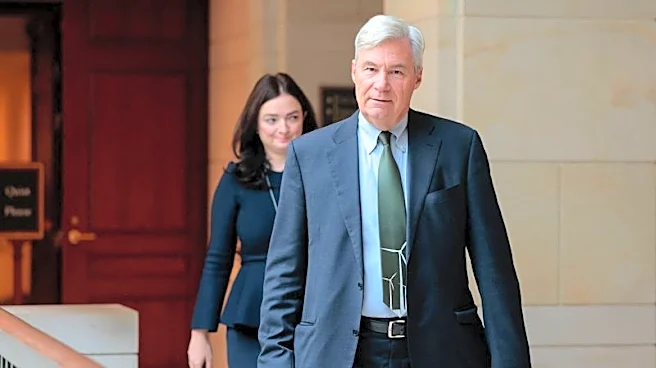
Senator Jeff Merkley (D-Ore.) has officially announced his intention to seek the chairmanship of the Senate Environment and Public Works (EPW) Committee in the upcoming Congress. This move comes as Democrats are projected to hold at least 55 Senate seats,
positioning Merkley, currently the ranking member of the Senate Budget Committee, for a significant leadership role. The chairmanship of the EPW Committee is becoming available because Senator Sheldon Whitehouse (D-R.I.), the current ranking member, plans to chair the Senate Judiciary Committee next year. Senator Merkley expressed enthusiasm for the potential to lead the EPW Committee, highlighting its jurisdiction over critical issues affecting American communities. He emphasized the importance of clean air and clean water for all citizens, regardless of their location. Merkley outlined his priorities, which include tackling toxic substances such as asbestos, plastics, and 'forever chemicals' that pose substantial health risks. Additionally, he aims to strengthen the nation's transportation infrastructure, which he views as vital for a robust economy, and continue addressing environmental issues that support human health.
Why It's Important?
Senator Merkley's pursuit of the EPW Committee chairmanship signals a potential shift in the legislative agenda concerning environmental protection and infrastructure development. His stated priorities, particularly regarding toxic chemicals and transportation, could lead to renewed legislative efforts and increased oversight in these areas. For industries dealing with chemical manufacturing, waste management, and infrastructure projects, this could mean stricter regulations, new compliance requirements, and potentially increased federal funding for specific initiatives. Environmental advocacy groups are likely to welcome Merkley's leadership, given his progressive stance and strong advocacy for environmental causes. Conversely, industries that might face more stringent environmental controls could anticipate increased operational costs or a need to adapt their practices. The focus on transportation infrastructure could also influence federal spending priorities, potentially benefiting states and regions with significant infrastructure needs or those involved in construction and engineering sectors. His leadership could also shape the national conversation around public health and environmental justice, particularly concerning communities disproportionately affected by pollution.
What's Next?
Following Senator Merkley's announcement, the next steps will involve formalizing committee assignments and leadership roles within the Democratic caucus for the upcoming Congress. While Merkley's bid is clear, the internal processes of the Senate Democratic leadership will determine the final committee chairs. If successful, Merkley will begin to shape the EPW Committee's agenda, potentially introducing legislation or initiating hearings on his stated priorities, such as toxic chemical regulation and infrastructure improvements. Stakeholders, including environmental organizations, industry lobbyists, and state and local government officials, will likely begin engaging with Merkley and his staff to advocate for their interests and influence the committee's direction. The committee's work under his leadership could lead to new legislative proposals that will then move through the Senate, requiring bipartisan support or significant Democratic unity to pass. The focus on 'forever chemicals' and plastics could also prompt increased research and development into safer alternatives and more effective remediation strategies.
Beyond the Headlines
Senator Merkley's potential leadership of the EPW Committee extends beyond immediate legislative actions, touching upon broader societal and economic implications. His emphasis on 'tackling toxics' could catalyze a national re-evaluation of chemical safety standards and manufacturing practices, potentially leading to long-term shifts in industrial production and consumer product safety. This could also spur innovation in green chemistry and sustainable materials, creating new economic opportunities while addressing public health concerns. Furthermore, his focus on transportation infrastructure could influence urban planning and regional development, promoting more sustainable and resilient systems in the face of climate change. The committee's work under Merkley could also elevate discussions around environmental justice, ensuring that policies address the disproportionate impact of pollution on vulnerable communities. This could lead to a more equitable distribution of environmental benefits and burdens, fostering a more just society. The long-term impact could be a more robust regulatory framework that prioritizes public health and environmental protection, potentially setting new global standards for environmental governance.