






What's Happening?
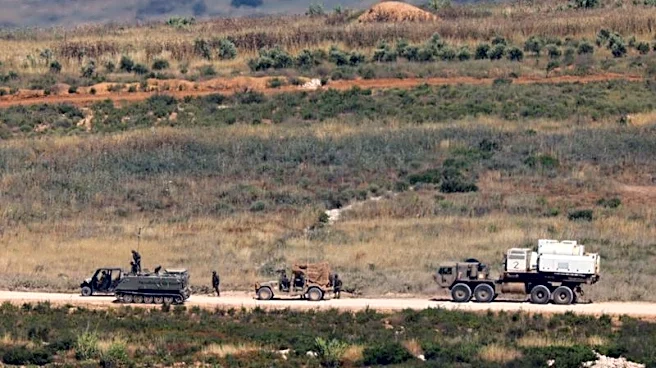
Iran's Central Military Command has issued a warning to residents of northern Israel, advising them to leave the area if Israel conducts strikes in Beirut. This warning comes amid escalating tensions over Lebanon, with Iranian state television suggesting
that the ceasefire between Iran and the United States could collapse if Israeli attacks in Lebanon continue. The Tasnim News Agency, which is closely aligned with Iran's hardline elements, reported that Iran has halted indirect talks with Washington due to Israeli operations in Lebanon and Gaza. Iran is demanding a complete Israeli withdrawal from territory captured in Lebanon, linking any future agreement with the United States to a ceasefire between Israel and Hezbollah. This development underscores Tehran's intention to restrict the Israel Defense Forces' actions in Lebanon, allowing Hezbollah to continue its operations.
Why It's Important?
The situation highlights the fragile nature of the ceasefire between Iran and the United States, with potential implications for regional stability. Iran's demands for Israeli withdrawal and cessation of operations in Lebanon could significantly impact the geopolitical landscape, affecting U.S. foreign policy and its relations with Israel. The halt in negotiations may lead to increased military tensions, affecting global oil markets and international diplomatic efforts. The involvement of Hezbollah, a key player in the region, further complicates the situation, potentially leading to broader conflicts involving other Middle Eastern countries. The U.S. and its allies may face challenges in balancing diplomatic efforts with military strategies, impacting international relations and security policies.
What's Next?
The future of U.S.-Iran negotiations remains uncertain, with potential for renewed hostilities if no agreement is reached. The U.S. may need to reassess its diplomatic strategies and military presence in the region, considering Iran's demands and the involvement of Hezbollah. International stakeholders, including the United Nations and European Union, may seek to mediate the situation, aiming to prevent further escalation. The outcome of these negotiations could influence future U.S. foreign policy decisions, particularly regarding its alliances and military commitments in the Middle East. The situation may also affect global oil prices and economic stability, as tensions in the region often impact energy markets.