



What's Happening?
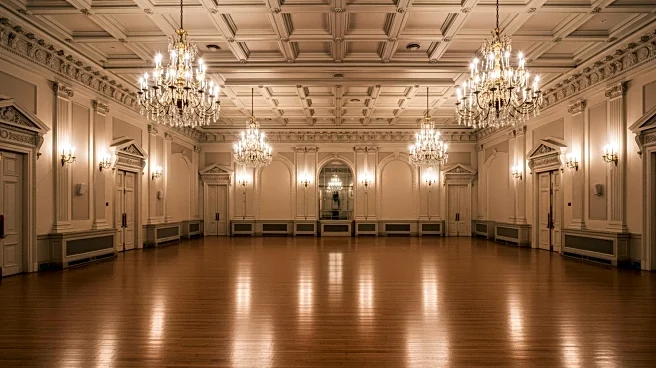
President Donald Trump has initiated a significant construction project at the White House, aiming to build a new ballroom to accommodate large gatherings. This project involves the demolition of the East Wing to make way for a 90,000-square-foot space,
initially estimated to cost $200 million, but later updated to $400 million. The ballroom is intended to host up to 999 guests, addressing Trump's long-standing concern about the limited capacity of existing White House rooms for entertaining. Gary Walters, a former White House chief usher, noted that previous presidents also expressed the need for more space. The project has drawn criticism from historians and preservationists due to the demolition of the historic East Wing, but Walters highlighted that the White House has a history of structural changes to meet evolving needs.
Why It's Important?
The construction of a new ballroom at the White House reflects broader themes of presidential legacy and the balance between modernization and preservation of historical sites. This project underscores President Trump's focus on enhancing the White House's capacity for hosting large events, potentially increasing its role in diplomatic and social functions. The financial implications are significant, with the cost doubling from initial estimates, raising questions about funding and resource allocation. The project also highlights the ongoing debate about maintaining historical integrity versus adapting to contemporary needs, a challenge faced by many historical landmarks.
What's Next?
As the construction progresses, reactions from various stakeholders, including historians, preservationists, and political figures, are anticipated. The completion of the ballroom could lead to increased hosting of large-scale events at the White House, potentially influencing diplomatic relations and social engagements. The project's funding, reportedly involving private donations, may also prompt discussions about transparency and accountability in financing public projects. Additionally, the impact on the White House's historical status and its preservation will likely continue to be a topic of debate.
Beyond the Headlines
The decision to demolish part of the White House for new construction raises ethical and cultural questions about the preservation of national heritage. This development may set a precedent for future modifications to historical sites, balancing the need for modernization with the preservation of cultural identity. The project also reflects broader societal trends towards larger, more inclusive spaces for public and private events, potentially influencing architectural and cultural norms.