
What's Happening?
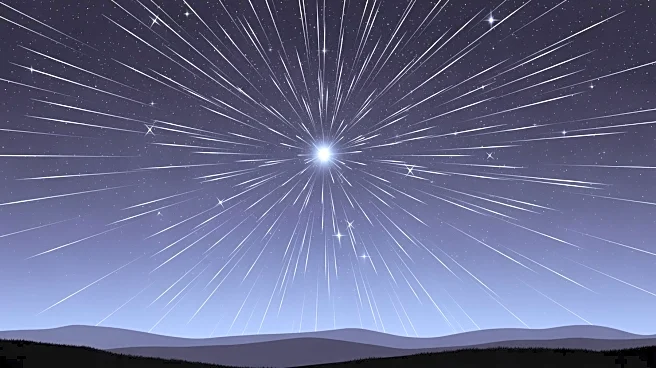
The Geminids meteor shower, one of the most spectacular annual meteor events, is set to peak overnight, providing a dazzling display for stargazers. This meteor shower, which can produce up to 120 meteors per hour, is known for its bright, colorful meteors that
are visible to the naked eye. The Geminids originate from the debris trail of the asteroid 3200 Phaethon, unlike most meteor showers that are caused by comets. The meteors will appear to radiate from the Gemini constellation, specifically near the bright star Castor. The best viewing conditions are in dark areas away from city lights, with the radiant point rising in the east around 9 p.m. local time and reaching its highest point at 2 a.m. ET.
Why It's Important?
The Geminids meteor shower is significant not only for its visual spectacle but also for its scientific interest. As one of the few meteor showers originating from an asteroid, it provides unique insights into the composition and behavior of such celestial bodies. The event draws attention to the importance of preserving dark skies, as light pollution can significantly diminish the visibility of such natural phenomena. For amateur astronomers and the general public, the Geminids offer an accessible opportunity to engage with astronomy and appreciate the wonders of the universe.
What's Next?
Following the peak of the Geminids, the meteor shower will continue to be active until December 21, though at a reduced rate. Observers are encouraged to find optimal viewing locations free from light pollution to maximize their experience. The event may prompt discussions on light pollution and its impact on astronomical observations, potentially influencing future policies aimed at preserving dark skies. Additionally, the scientific community may continue to study the unique characteristics of the Geminids to enhance understanding of asteroid-related meteor showers.