
What's Happening?
A study published in Nature explores the use of PD-1 inhibitors to improve the effectiveness of radiotherapy in treating tumors by normalizing tumor blood vessels. Conducted by researchers at Fudan University
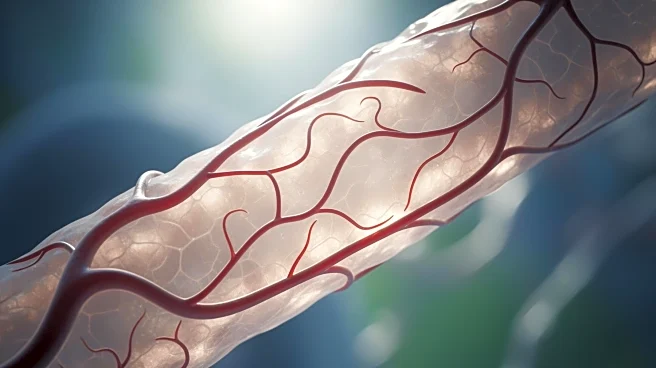
Shanghai Cancer Center, the study involved murine models of breast and lung cancer. The research aimed to determine the optimal sequence of combining anti-PD-1 therapy with local tumor radiotherapy. The study found that PD-1 inhibitors, when administered in conjunction with radiotherapy, enhanced the radiosensitivity of tumors by normalizing the tumor vasculature. This normalization improved oxygenation and reduced hypoxia, making the tumors more susceptible to radiation. The study utilized various experimental techniques, including immunofluorescence and flow cytometry, to analyze the effects of the treatment on tumor microenvironments.
Why It's Important?
This research is crucial as it offers a potential strategy to enhance the effectiveness of radiotherapy, a common cancer treatment. By improving tumor oxygenation and reducing hypoxia, PD-1 inhibitors could make tumors more responsive to radiation, potentially leading to better patient outcomes. This approach could be particularly beneficial for patients with tumors that are resistant to conventional radiotherapy. The findings also contribute to the growing body of research on immune checkpoint inhibitors, highlighting their potential beyond immunotherapy. If successful in clinical applications, this strategy could improve survival rates and quality of life for cancer patients.
What's Next?
Future research will focus on translating these findings into clinical trials to assess the safety and efficacy of combining PD-1 inhibitors with radiotherapy in human patients. Researchers will also explore the molecular mechanisms underlying vessel normalization and its impact on tumor microenvironments. Understanding these processes could lead to the development of more targeted therapies and personalized treatment plans for cancer patients. Additionally, further studies may investigate the potential of this approach in treating other types of cancer.