






What's Happening?
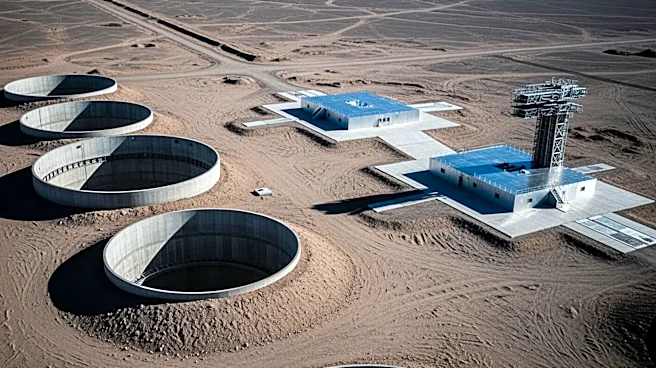
China is significantly expanding its nuclear capabilities by constructing a network of launch pads, bunkers, and communications nodes near its nuclear missile silos. Satellite images reveal over 80 pads potentially for mobile missile launchers and air-defense
batteries. This development is part of China's broader military modernization under President Xi Jinping, which has been criticized for its lack of transparency. The Pentagon reports that China is on track to field 1,000 warheads by 2030, intensifying nuclear competition with the United States amid tensions over Taiwan. Despite China's 'no first use' policy, some analysts suggest it may use nuclear coercion to deter external involvement in a Taiwan conflict.
Why It's Important?
The expansion of China's nuclear infrastructure underscores a growing strategic competition with the United States, particularly as tensions rise over Taiwan. This development could alter the balance of power in the region and complicate U.S. defense strategies. The lack of transparency from China raises concerns about its intentions and the potential for miscalculations. The U.S. and its allies may need to reassess their security postures and diplomatic strategies in response to China's enhanced nuclear capabilities. This situation highlights the importance of international arms control agreements and dialogue to prevent escalation.
What's Next?
The U.S. and its allies are likely to monitor China's nuclear developments closely and may seek to engage China in arms control discussions. The expansion could prompt the U.S. to bolster its own nuclear deterrent and defense systems in the Asia-Pacific region. Additionally, regional actors like Japan and South Korea may reconsider their security policies in light of China's growing capabilities. Diplomatic efforts to address tensions over Taiwan and nuclear proliferation are expected to intensify.