





What's Happening?
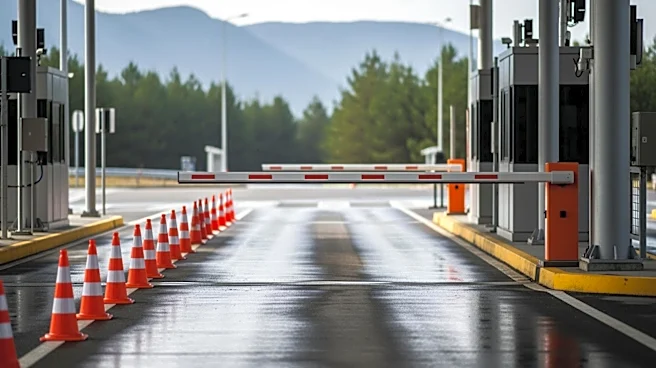
Southbound travel from British Columbia to Washington State has experienced a significant decline, with a 55% drop at four major U.S. points of entry along the B.C. border. This includes a 31% decrease at the Aldergrove-Lynden crossing. The Cascade Gateway
Border Data Warehouse and Whatcom Council of Governments report that the number of vehicles with B.C. license plates entering the U.S. has fallen to less than half of what it was before President Trump took office. Factors contributing to this decline include President Trump's discussions about annexing Canada and initiating a trade war. In March, southbound travel by B.C. vehicles decreased from 216,284 in 2024 to 96,709 in 2026.
Why It's Important?
The decline in cross-border travel has economic implications for both the U.S. and Canada. The U.S. Travel Association predicts a 3.2% decline in international tourism spending, potentially resulting in a $5.7 billion loss and putting approximately 14,000 American jobs at risk. The reduction in Canadian visitors is also expected to impact local economies, particularly in border states like Washington. Additionally, safety concerns among Canadians, due to reports of aggressive tactics by U.S. Immigration and Customs Enforcement officers, may further deter travel. This trend highlights the broader impact of political and trade tensions on international relations and economic activity.
What's Next?
As cross-border travel continues to decline, businesses and tourism organizations may need to adapt by targeting other markets or encouraging domestic tourism. Efforts to improve safety perceptions and ease travel restrictions could help reverse the trend. Additionally, ongoing political and trade negotiations between the U.S. and Canada may influence future travel patterns. Monitoring these developments will be crucial for stakeholders in the tourism and retail sectors, as well as policymakers seeking to mitigate economic losses.