






What's Happening?
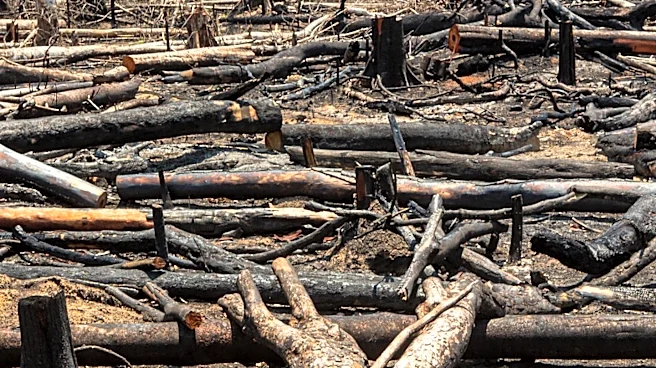
Indonesia is reportedly reversing its plan to convert vast areas of tropical rainforest into rice and sugarcane plantations. This initiative, which began in 2023, aimed to transform 7 million acres of forest in New Guinea and 3 million acres in Borneo
into farms to achieve food and energy independence. Critics had labeled this undertaking as 'the world’s largest deforestation project.' Officials recently announced that Indonesia has achieved rice self-sufficiency three years ahead of schedule, eliminating the need to expand rice cultivation into forest areas. Future food and biofuel production will now utilize degraded land instead. This shift comes after a surge in forest loss last year, reaching an eight-year high due to the push for agricultural conversion, which had led to skepticism among environmental campaigners regarding the government's commitment to curbing deforestation.
Why It's Important?
This policy reversal by Indonesia carries significant environmental implications, potentially mitigating large-scale deforestation and its associated impacts on biodiversity and climate change. The original plan threatened critical tropical rainforests, which are vital carbon sinks and habitats for numerous endangered species. By shifting agricultural expansion to degraded land, Indonesia could reduce its carbon emissions and preserve valuable ecosystems. For the U.S. and global community, this decision aligns with international efforts to combat climate change and protect biodiversity. It also highlights the complex balance between national food security goals and environmental conservation, demonstrating that sustainable alternatives can be found. The success of this reversal could serve as a model for other developing nations facing similar pressures to expand agriculture at the expense of natural habitats.
What's Next?
While the Indonesian government has announced its intention to reverse course, the practical implementation of these statements remains to be seen. Conservation groups, such as Mighty Earth, emphasize that these positive declarations must be followed by concrete changes in decrees and policies to have a real impact. It is currently unclear what this means for ongoing conversion activities in New Guinea and Borneo, as a Forest Ministry spokesperson indicated that an immediate halt to all activities in these regions cannot yet be confirmed. Activists from Solidaritas Merauke, a coalition opposing the New Guinea project, have expressed historical skepticism about the government's commitment to sustainable development being reflected in policy and practice. The effectiveness of this reversal will depend on robust policy changes and stringent enforcement to ensure that forest areas are indeed protected and that agricultural expansion genuinely shifts to degraded lands.
Beyond the Headlines
The reported policy shift in Indonesia underscores a broader global challenge: balancing economic development and food security with environmental protection. The initial plan to convert rainforests into plantations reflected a common approach in developing nations to achieve self-sufficiency, often at a high ecological cost. This reversal, if fully implemented, could signal a growing recognition within the Indonesian government of the long-term value of its natural capital and the international pressure to adopt more sustainable practices. It also highlights the influence of civil society organizations and international scrutiny in shaping national environmental policies. The success or failure of this pivot will be closely watched as a case study in sustainable development, potentially influencing how other countries approach similar land-use decisions and the integration of environmental considerations into national economic strategies.