










What's Happening?
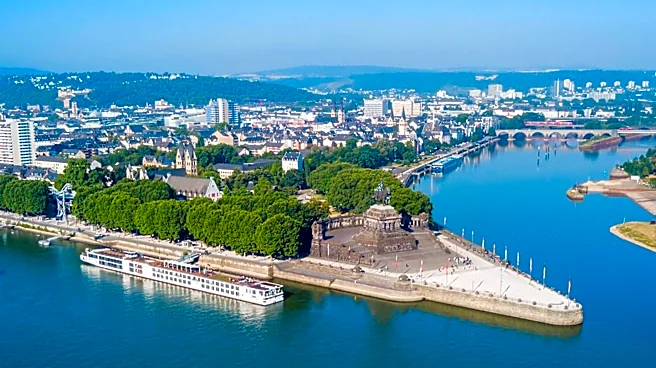
Recent rainfall in southwest Germany has led to a slight rise in water levels on the Rhine River, but shallow conditions continue to impede shipping operations. The Rhine is a vital shipping route for commodities such as grain, minerals, ores, coal, and
oil products. Due to the low water levels, cargo vessels are forced to sail only partially loaded, increasing transportation costs for cargo owners. The cost of tanker barge transport from Rotterdam to Karlsruhe has risen significantly, reflecting the increased logistical challenges. The inland navigation agency WSV forecasts that water levels at the chokepoint of Kaub will rise further, allowing ships to carry greater loads.
Why It's Important?
The Rhine River is a crucial artery for European industry, connecting major industrial regions in Germany, Switzerland, France, the Netherlands, and Belgium. The ongoing low water levels pose a significant challenge to industries reliant on this route for transporting essential commodities. Increased transportation costs and logistical challenges could impact the competitiveness of European industries, particularly in sectors such as chemicals, coal, and oil products. The situation underscores the vulnerability of supply chains to environmental factors and highlights the need for adaptive strategies to mitigate such risks.
What's Next?
Further rainfall is expected in the region, which may alleviate some of the shipping constraints. However, sustained improvements in water levels are necessary to fully restore normal shipping operations. Industries and logistics providers will need to continue monitoring water levels and adjust their operations accordingly. Long-term solutions may involve investments in infrastructure and alternative transportation methods to enhance resilience against similar disruptions in the future.